
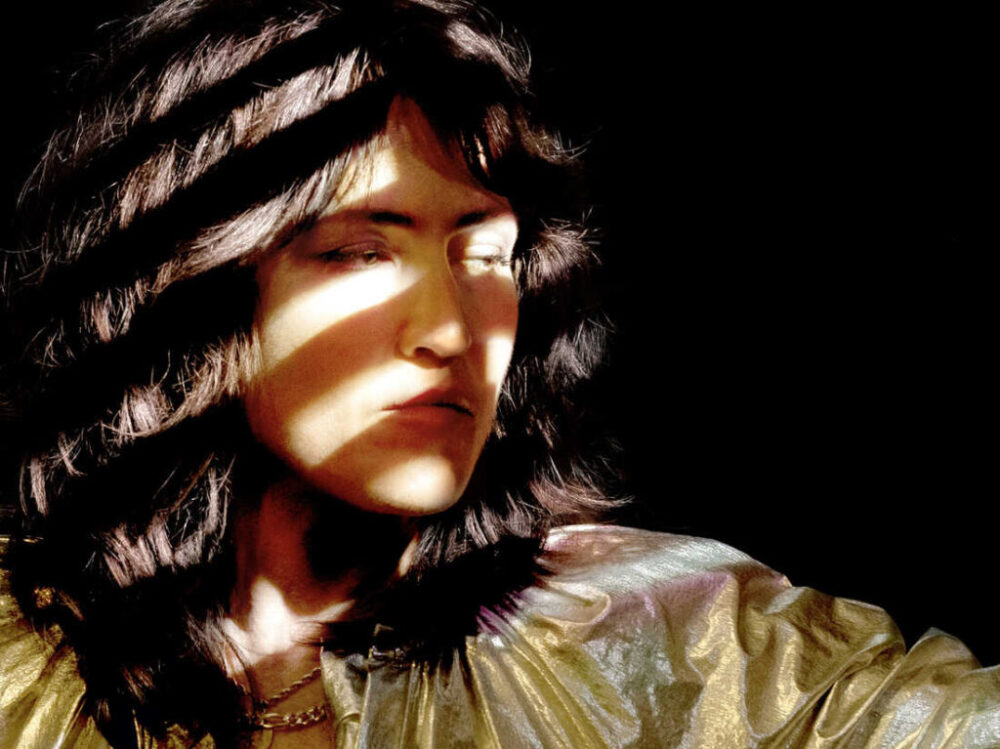
Joan As Police Woman – The Solution Is Restless: Interview
Joan As Police Woman has released her album The Solution Is Restless, a unique collaboration with pioneering Afrobeat drummer Tony Allen, who passed away shortly after the recording. Here is Joan to talk about loss, life and the love of making music.
The 13th Floor’s Marty Duda spoke to Joan As Police Woman (aka Joan Wasser), who had just arrived home in Brooklyn after a visit to Europe to promote her new album and to play a few dates with her friend Damon Albarn.
As it turns out, Joan is quite enamoured by New Zealand and by the leadership qualities she sees in Prime Minister Jacinda Ardern. In fact, she even wrote a song about her, titled Take Me To Your Leader.
So, here is Joan, talking about working with Tony Allen, missing Hal Willner, worshiping Joni Mitchell and admiring Jacinda Ardern. There’s a lot here!
Click here to listen to the interview:
Or, read a transcription of the interview here:
MD: So my understanding is that Take Me To Your Leader has a Kiwi thing going on. It’s inspired by Jacinda, is that true?
JW: It is absolutely true. I became aware of Jacinda when, I mean sadly, around the Christchurch incident and the fact that she just very rationally banned those guns. And, you know, coming from a country that has more guns than we do human beings, I was just so inspired by that. And I realized that running up, you know, the country is much smaller than the United States. It also doesn’t have the tradition of gun owning and the NRA and all that stuff, but just the idea that you could just do that. You could just ban guns. It was so thrilling to me.
So then I just kept sort of an eye on her and then watching her navigate the pandemic…again, especially in light of the situation here, you know, just watching her navigate with such care for human beings. And the feeling that she’s actually thinking about the human beings in the country that she’s leading and making decisions for everyone’s well-being. This sounds like the most obvious thing, and we know, it’s almost non-existent. You know, it definitely feels non-existent at times in my country and I know I’m not alone.
And so I just, I had this dream, during the pandemic, that the leaders of my country, and you know, we could really include mostly everyone else, would go to her and ask her for advice. How do you run a country? How would you handle this situation? Because I feel like leaders so often feel like they have to already have all the answers, already know what to do. And I just had this dream that they would go to her and ask her for suggestions.
MD: But it’s interesting, I don’t know, have you been following how the pandemic, and the COVID thing has been going in New Zealand recently?
JW: Yeah, I know that there’s a lot of upset. And, you know, I know, I know.
MD: It’s interesting, because I mean, no matter how good somebody seems to be doing, you’re gonna find somebody who’s gonna get upset and rebel and protest.
JW: Absolutely. The point is that she seems to be coming from a place of compassion, and care, and thoughtfulness. And, there’s always going to be problems and differences in opinion. But to start from a place of compassion is just something that we could, I feel like, we could use a lot more of. So I wrote that song, Take Me To Your Leader, because I’m ready to play.

MD: Now, you mentioned the word ‘inspired’ and it seems you were inspired to get Tony Allen to work on this record, which seems like a stroke of genius, especially in retrospect, since sadly he’s no longer with us. So tell me the process that happened. How did this occur?
JW: Well, thank you. I think it was a pretty good idea as well. So, I mean, you know, I listened, I became very, I just fell in love with Tony Allen through listening to Fela (Kuti), like in my 20s and stuff. Then, Joan As a Policewoman played a festival with The Good, The Bad, and the Queen in 2007. And I had heard rumors that Tony Allen was playing but you know, I didn’t…I wasn’t sure. And then I watched their set and I was just, I mean, I was fixated on him and watching him and I felt so like, just honored to be in his presence.
But I had to wait 12 years to meet him. I met him in 2019, Damon Albarn introduced us. We were all at an Africa Express event in London and he introduced us. Tony and I just hit it off immediately. We’re laughing the whole time we played. We did a cover of I Wish I Could Know How it Feels to be Free by Nina Simone. And when we were rehearsing it, you know, the rehearsal space was set up as if you’re on a stage. So Tony’s in the back and then like the singer would be in the front, facing out as if you’re facing an audience. And when we were rehearsing, there was no way I could have my back to Tony Allen, so I just turned my microphone around and I just sang to him. And I mean, we just were laughing pretty much the whole time. And at the end of that whole thing I asked him, I mean I sort of heard myself ask, ‘would you ever be up for recording?’ And he said, ‘Yeah, definitely. Let’s do it’. You know, and there it was. It’s one of those situations where you don’t know until you ask.
 MD: Exactly right. Now I’m kind of along those lines from an outsider like myself, I’m looking at your career and I know you put out an anthology called a Joanthology, around 2019 did a little bit of a covers album after that. So were you at the point where you’re kind of cleaning out the nest and setting yourself up to do something different anyway? Was that your mind-frame?
JW: It’s interesting. I really wasn’t. I made that anthology because I would often get the question, ‘Oh, you have so many records, what should I start with? What should I listen to first?’ And that’s a strange question for me, because it feels a little bit like Sophie’s Choice, like, what am I, I love all my, you know, I didn’t put out any albums that I don’t like, thank goodness. So I sort of made an anthology to just say, oh, start with the anthology. I was also about to do a year-long solo tour. So, it wasn’t really a completion of any amount of time. It was just an easy thing to direct people to, mostly.
MD: So the third person in the mix is Dave Okumu. So how did the three of you work together? Like were you in one place at one time? Was there a lot of communication? Or was it kind of, other kinds of communication rather than verbal?
JW: So well, I had worked with Dave in the past, and we had been trying to figure out a way to work together in the future. And then I just, I brought him along as the third person. And we met one night, it was one night of recording in Paris…Rony lived in Paris. And we just jammed. Like, I wanted it to be completely free jamming like Tony sat down, Dave and I were playing. I was playing Wurly and he was playing bass. And Tony sat down, put on the headphones and said, ‘Where’s the click?’, you know, like the click track that keeps that keeps the drummer on a regular beat. And I said, ‘Tony, I actually don’t want to use a click, Is that okay?’ And he was like, ‘Oh, okay. Yeah. Okay’.
And then I think he realized, this wasn’t just a session where I wanted him to play on my music, I wanted the three of us to play together, make music from the beginning together, and figure it out together. So I’d ask the guys in the control room to just press record and not stop recording. So we played for an hour and just found grooves and worked them out. And it happened really easily because the three of us, I think, are really used to, and love, collaborating. So it was effortless, we just played and then things would fall apart and then we’d start a new groove and get into it. It was it was really easy. Then we had a huge African meal. And then we played for another 45, an hour or something. I left with the files and planned on listening and working on them when I had time.
And what happened is I you know, I was about to put out a live album, I put out a second covers record that I have had a lot of dates around. And then the pandemic hit and I was not allowed, I mean, obviously to go on tour, but to do anything. So here was my chance to listen to what I had there. I didn’t know what I was going to get out of it, maybe nothing, maybe one song maybe three songs. But it was such a sort of diamond mine of material. I just listened for a while like a couple of weeks, I just listened. And then I just started editing and I edited for months. I created song forms. I took, for instance, I made the tracks and all different ways.
The first track, The Barbarian, that’s two bars of Tony looped, and then I just wrote a new song over it. Some of the other songs like Geometry Of You, that has my original Wurlitzer and Dave’s original bass playing, at least in the A section in the verses, you know, so more of the material is represented on the song. But I just created songs in all these different ways and then wrote them, wrote them during the pandemic, and recorded them during the pandemic. It is extremely work intensive, but I was actually really happy about that, because I had all this time. And I threw myself into working on the record, you know, also as just like a way to stay alive to stay, you know, stay alive spiritually, just to stay alive in my mind creating. Because New York City got decimated, right from the top, one of my really good friends died really early on, and then, I was in the studio then. And then three weeks later, I was in the studio again and I got the call about Tony. So then it was like further steeped in, I just I felt like I really had to honor the fact that I got to record with this legend. So I put everything I possibly could into making this record.
MD: You mentioned The Barbarian leads off the album, and it’s over 11 minutes long. I think it’s amazing that you kind of just threw your audience into the deep end. So obviously, you have a lot of faith that your ‘fans’, for want of a better word, are willing to follow you and kind of go where you want to take them.
JW: I feel like, I mean, It’s funny you say it like that. I mean, it’s not funny, It makes sense. It’s funny, because I heard that idea just a little bit earlier today for the first time. And so I’m hearing it again. I think I feel it more as I respect my listeners. It’s sort of like, this is what feels right to me. And I wouldn’t change, I wouldn’t disrespect my listeners by changing what felt right to me. You know what I mean? So I just do what feels like the right idea. And I feel like that’s the most responsible way to present the album because that’s what I would want from an artist. I feel like a lot of the people that listen to my music are real music heads. So you know, I want to give them the experience that I would want to have.
MD: You’ve done a show recently in Paris if I’m not mistaken is that right?
JW: Yeah, I’ve done a few shows. I did a show in Paris, actually on the release date on November 5th.
MD: And you opened with The Barbarian if I’m not mistaken.
JW: Yes, I did. I opened with the drums of The Barbarian. I was doing a solo show so I opened with the drums of The Barbarian and I played some other stuff over it. I couldn’t present the 12 minute long Barbarian with a massive string section and whole huge layered band. I wish, but that was not on the cards that night. I did sample Tony’s drums and I did create arrangements to some of the songs by using, bringing him in and out and using like, I recorded drones on the violin to make arrangements for the songs. But that was wonderful because as well, Damon Albarn who had a record out a week later that just came out a few days ago. He also sang on the album. So we did a duet of that song, Get My Bearings. That’s the second song on the album. And that was just really, that was really special.
MD: So tell me what’s going on musically between you and Damon? Because you’ve mentioned him a few times, and he’s obviously an important person in your musical life at the moment.
JW: Yeah, he really is. He’s an important part, I think of music in general. He’s really brought so many people together, he created, along with Ian Burrell, the writer, journalist. Ian and Damon created this organization called Africa Express that brings mostly Western musicians to different countries in Africa, to learn about the music, and to ultimately collaborate. So I met Damon in 2011, or 2010, in Ethiopia, for an Africa Express trip. And that trip changed my life. Absolutely, that place is magical and the music there is just tremendous. And so we became friends then.
 I feel like we have a similar way of thinking about music and, and a similar curiosity about music and about collaboration. And then we’ve just seen each other here and there over the years. I wrote a song with him for the last Gorillaz album. That just came together by us just sort of hanging out at a studio and on the couches, and then just sort of very easily, you know, getting a groove going, but that is like, how that’s how to make music that feels good. By just getting as relaxed as possible and then seeing what happens. Then we also did, there was at Royal Festival Hall in London a few days ago, there was a Tony Allen tribute.
MD: Oh, okay. Who else was there?
 JW: Oh, wow. So, you know, Tony Allen worked with a lot of different kinds of artists. So Ezra Collective were there, Eska, an amazing singer who did stuff with him. Ben Okri, who’s a poet, who was amazing. Bucky Leo, who was in his quartet. I actually, I saw him… the last time I saw Tony was with his Quartet at Brixton Electric at the end of 2019. And of course, Damon played and I played and the house band was incredible. Dave Okumu, it was part of the house band, played the whole show. And then we did our songs together. It was tremendously uplifting. And Jimmy, Jimmy Tenor was there, because they had made a record together, just like all these really cool, just like such a cool combination of people. That was wonderful.
MD: Now, not to be overly morbid or anything, but the other loss that you’ve kind of had to deal with was Hal Willner as well, who you worked with quite a bit. So I’m wondering…that’s a lot of stuff to kind of process in the last couple of years.

JW: Yeah, it is, it is. Hal Willner‘s death was really unexpected, and really is still shaking me. I haven’t really figured out a way to process it yet. Because it didn’t feel like it was his time, you know, and he was an incredibly important person to me. He was the person that would hear my records, every single one, he was the first person I would play it for, play them for. He was just like such an important person in my musical life, he was incredibly inspiring.
Talk about unique collaborations, he’s the king of that, and he had been doing that for so many years. Such a genius truly of the ability to put people together that you’d never expect, and then just have the results be brilliant. So, yeah that was really shocking. And because of that, as well as Tony’s death, there’s a lot of rumination on what life means now on this record. And as well, New York City was losing 1000 people per day. The sirens were just constant. Nobody was on the street, except for the EMT workers that were pretty much covered in plastic because we didn’t have the proper, not the vaccinations.
This was at the top of the pandemic, they didn’t have the proper gear or anything and it was just, they were just taking people out on stretchers all over the place. You know, they were just like, either dead or about to die. It was so shocking, and so horrifying. So yeah, there is part of that on this record. But it’s more about what are we going to do today, because we don’t know what’s gonna happen tomorrow.
MD: On a happier note, one person who is still with us is Joni Mitchell, who just celebrated a birthday the other day. And on your track Reaction…I may be reading more into this than I should, but there’s kind of an offhand reference in the lyrics to Coyote and I was wondering if that was somehow Joni related?
JW: Ah, thank goodness for you! It is, absolutely! You’re the first person to catch it. You are.
MD: I’ll give myself a gold star.
JW: Yeah, a gold star is right. Joni Mitchell is just such an enormous influence on me throughout my life. And I love that song Coyote so much. But it sort of starts, the reference starts a little bit earlier or where she says, the very top of Coyote, she says ‘no regrets Coyote. We just come from such different sets of circumstance.’ And so, I say those words, but my line is, ‘we can grow up in the same country, live on the same block, be from the same family and still come from such different sets of circumstance’. And then I say, ‘right, Coyote’, you know, it’s just, it references that special, special song, but it’s also you know, I use the lyrics in a very different way. So yeah, thanks for picking that up.
MD: That’s the least I can do. I’m just glad I got it, right. So are you already thinking about what you’re gonna do next? Have you given any kind of thought to that? Are you in the middle of this knee deep?
JW: Well, I am thinking about what I’m going to do next, but what I’m going to do next is go on extensive touring of this album. I have already begun rehearsing with my band, because we have a lot of work to do, working out how these songs are going to be presented. Who’s going to take what parts. My amazing drummer Parker Kindred, he’s an incredible guy and an amazing, amazing, truly amazing drummer. And, you know, he is working out parts for himself that are his.
MD: No pressure following up on Tony, but there you go.
 JW: I know, well don’t even try talking to him about that, he’s so freaked out. But he’s creating parts that make sense for his life as a drummer. But that also feel right in the song. So, I mean, I love rehearsing so much. It’s so fun to me. So we’ve begun rehearsing, we’re just doing tons and tons of rehearsing and then we go on the road, starting in the middle of February, and we hit New Zealand and what, June?
MD: I think that’s the case. Yes, absolutely.
JW: I think June, yes. Oh, no one’s more excited than me! It’s true.
MD: Very good. And are you writing constantly? Do you just as a course write songs? Or do you do it when you have to?
JW: I do it when my mind says you have to write a song. And right now, I just got back from being in Europe for two and a half weeks doing all the press and promo for this record. So I have not been writing songs right now. But as they arrive, I will take advantage of them. But in the meantime, I’m just, I’m really just concentrating on getting the show together for the tour.
MD: Well, we’re looking forward to that very much. I don’t want to keep you away from that. I’ll let you go now.
JW: Thank you. Thank you.
MD: Thank you very much for talking to me, and I will definitely see you when you get here in June. And who knows, maybe just Jacinda will come and see you.
JW: Oh, can we please. I would do anything to meet Jacinda.
MD: She’s been by my studio here.
JW: Jacinda has been to your studio?
MD: Yeah. I have photos of her going through my record collection. She did a little radio show for me. I’ll send you a link to that.
JW: Stop it. Stop it!
MD: No, I’m not kidding. It was before she was PM, but still, it was pretty cool.
JW: Goodness gracious. Can you please get her to the show?
MD: I’ll see what I can do. I can’t promise anything but I’ll do my best.
JW: I don’t need you to promise, just use your special powers.
MD: All right. No problem.
JW: Wonderful.
Click here to order The Solution Is Restless
Click here for Joan As Police Woman NZ Tour Tickets
