
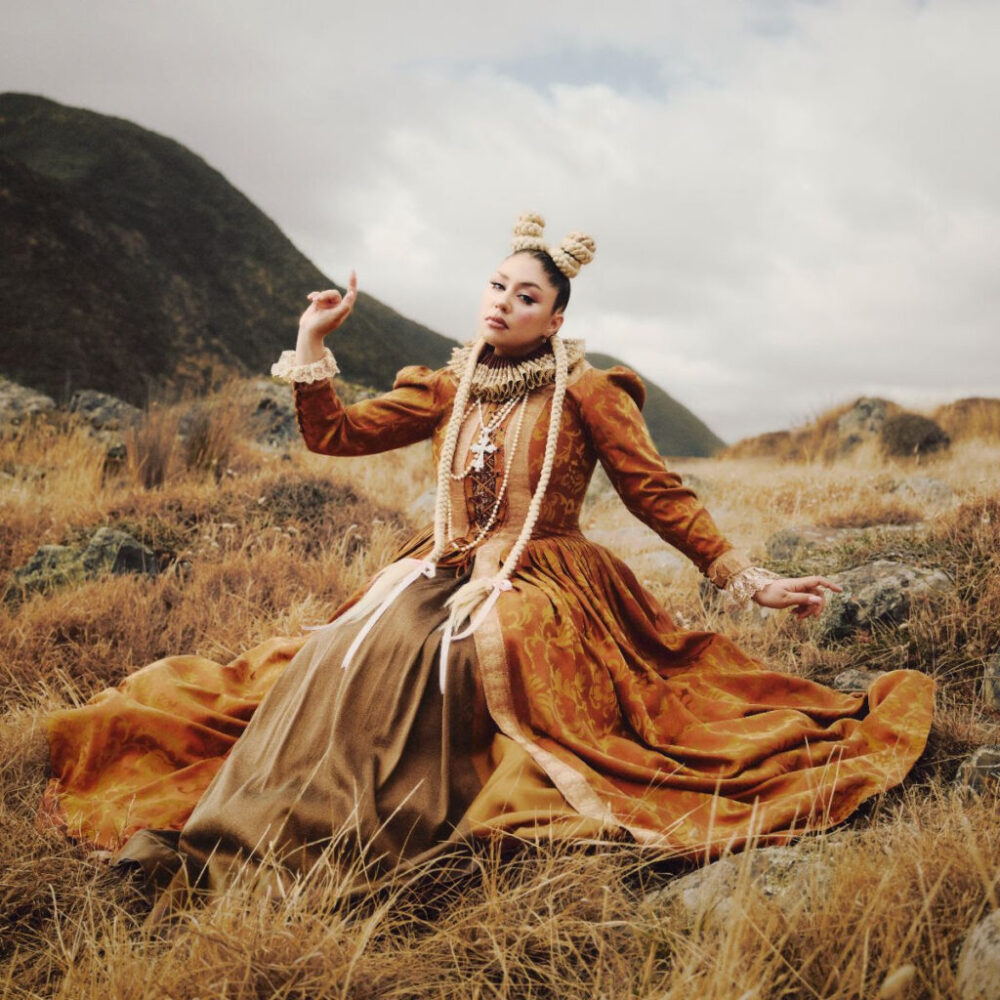
Theia — Girl, In A Savage World (13th Floor Album Review)
Theia doesn’t ease you in. Girl, In A Savage World opens with drone, breath, water
and chant, and you feel as if you are entering a ceremony.
Before any beat lands, you sense that this is pop as protest and reclamation. Theia’s voice, often ethereal in her earlier work, now arrives as karanga, calling through layers of distortion and history. She tells stories of colonisation, womanhood, and spirits buried beneath them.
Born Em-Haley Walker in Ōtautahi (Christchurch), Theia first appeared with a string of striking alt-pop singles that flirted with mainstream success yet hinted at deeper currents of identity and defiance. In recent years she has stepped firmly into that space, balancing her English-language output with her Māori-language project Te Kāhu, a body of waiata that honours her whakapapa and the women who came before her. Girl, In A Savage World draws these strands together, blending electronic experimentation with indigenous storytelling to create an album that feels both personal and ancestral.
From the outset Holy War sets the tone for what follows. Faith becomes a weapon and the sacred is reimagined as resistance. “You wield your guns! You shot our sons!” she cries later in Hoki Whenua Mai (Return The Land), her delivery part haka, part howl. The colonial wound is sung raw here as an act of truth-telling. This sense of confrontation underpins much of the album.
Across the opening tracks, Theia threads Te Reo Māori and English seamlessly, moving back and forth between time zones of the soul. The production mirrors her fury with heavy bass, industrial textures and sharp stabs of percussion that sound like musket fire.
The record’s combative core is established early with Patupaiarehe and Hoki Whenua Mai. On Patupaiarehe she inhabits the mythic pale-skinned forest spirits of Māori lore, subverting their image into a symbol of vengeance and memory. “You stole the land upon which I stand… / For the man who stole our land shall perish and be destroyed!” Folklore and fury intertwine as the soundscape is haunted by drones, echoing taonga pūoro and choral layers that rise like mist over battlefields.
Later, BALDH3AD! explodes with righteous anger, an unflinching dismantling of empire and patriarchy. “Your king sits high on his throne / He listens to his people, not to my own… / You are a cannibal, you brought the plague.” The chant “Ka whawhai tonu mātou, ake ake!” (“We will fight forever”) lands as a cry that links her directly to the land wars and beyond. It is one of the fiercest moments, with industrial percussion clashing against taonga timbres and her voice both preacher and warrior. There is rage here, yet no chaos. Theia’s control of phrasing, rhythm and sound makes the anger more powerful.
On other tracks, the battle turns inward. Pray 4 Me is an unholy hymn that reclaims womanhood from the clutches of religion. “I got a tattoo when I was eighteen / You thought that I was possessed / You tried to change me… Don’t pray for me or put me under your spell.” In this dialogue between daughter and mother, saint and sinner, the music breathes more, letting her voice linger like incense smoke.
In My Sister’s Hands in Mine, solidarity becomes sacrament. “And if I’m to be taken away for speaking truth, I’m willing to pay… I will not leave. I will fight by her side.” It is a rare moment of warmth as defiance turns to kinship and rage is tempered by aroha. Theia’s harmonies shimmer like an offering, fragile yet unwavering, her melody carrying the ache of remembrance and the tenderness of survival.
Eventually the anger gives way to something older and deeper, a dialogue with ancestors, the living and the dead. In the final track, I Picked a Flower from the Grave, she whispers to her great-grandmother, pledging remembrance and continuity drawn from whakapapa. The fury of earlier songs dissolves into reverence. The drones soften, the percussion recedes and her voice floats unaccompanied for a moment.
By the close of the album, Theia has positioned herself in an unbroken line of resistance that stretches across generations. Her defiance of colonial narratives is inseparable from her place within a continuum of wāhine who have spoken truth to power in their own times and ways. The unflinching political voice that drives this record is also a personal one, shaped by the women who came before her and the future voices she makes space for now. Her declaration is clear. Survival is not the absence of trauma but the transformation of it into mana. It is a cycle of loss and renewal that the album both laments and honours.
John Bradbury
GIRL, IN A SAVAGE WORLD is out Friday, Nov. 7th
Pre-Save the album on streaming platforms HERE
