
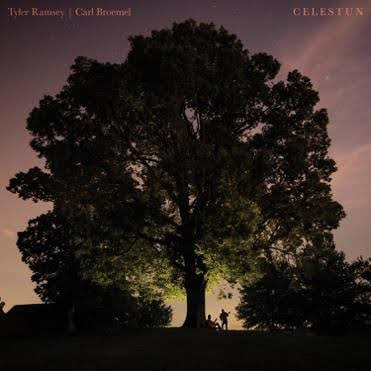
Tyler Ramsey & Carl Broemel – Celestun (Duo Quest) (13th Floor Album Review)
Tyler Ramsey & Carl Broemel open Celestun with intent and momentum, two acoustic guitars tumbling over one another in music shaped by interplay, response and craft.
The title track begins mid-movement, a sudden strum shifts the colour of the piece before it regroups, the guitars folding into interlocking fingerpicked figures. The album establishes its central dynamic, movement generated through conversation rather than display.
Both musicians arrive with long and distinct histories. Broemel’s work as a key member of My Morning Jacket has often centred on texture, harmonic shading, and structure within a large ensemble. Ramsey, formerly a songwriter and lead guitarist with Band of Horses, has spent the past decade refining a solo voice attentive to melody, detail, and emotional precision. Over time their paths converged with more deliberate intent, and these tracks absorb classical discipline, folk fingerstyle vocabulary, and the long arc of rock songwriting into a shared acoustic language.

That approach comes into sharp focus on Elizabeth Brown. The piece begins lightly before gathering speed, edging toward something almost dance-like. One guitar leans into bass and forward motion, the other answers with brighter, higher lines. They remain distinct throughout, provoking and responding rather than settling into a shared phrase. The pleasure lies in the exchange itself, playful yet measured.
Nevermind introduces one of the album’s few vocal moments. Broemel’s voice enters softly, conversational in tone, carried by guitars that move with greater looseness and ease. The repeated refrain, “Is there much difference,” patiently circles a thought, while the guitars subtly shift pace beneath him, briefly lifting before easing back toward a gentle close. The song feels reflective, carried by motion rather than pause.
Across the album, Ramsey and Broemel explore variation within a largely instrumental framework. In The Willows moves patiently from echoing picked notes to broader strums, pausing and resuming as it goes. Last Tarot foregrounds the physical act of playing, fretboard movement and pick noise shaping the piece alongside melody. Garvanza circles a theme without settling it, deliberately losing momentum before regaining balance, the music suggesting an unresolved exchange rather than a destination reached.
The album’s most overtly traditional folk moment arrives with Flying Things, featuring The Secret Sisters. Known for their close, Appalachian rooted harmonies, the Nashville based duo bring a communal lift to the song. Their voices sit just above Ramsey and Broemel’s, adding warmth and weight without overtaking the arrangement. The track leans more clearly into country-folk territory, its steady rhythm and dancing guitar lines supported by harmonies that feel shared rather than foregrounded.
Lineage runs quietly throughout Celestun. Fingerstyle passages and melodic pacing recall figures such as Bert Jansch & John Renbourn, are woven into the duo’s playing rather than quoted outright. A cover of Neil Young’s Sail Away near the album’s close is treated with care, softened into something reflective, its contours shaped by the shared guitars.
The album concludes with Sylvie’s Guitar, a steady, hymn-like progression that builds through repetition and variation. By this point, Celestun has established its character clearly. What lingers is the sound of two experienced musicians listening closely to one another, shaping music through response, and letting the guitars carry the conversation forward.
John Bradbury
Celestun is out Jan. 15 via Duo Quest/Tone Tree
PRE-ORDER/PRE-SAVE CELESTUN
