Nick Cave & The Bad Seeds + Aldous Harding – TSB Arena Wellington: February 6, 2026 (13th Floor Concert Review)
Nick Cave & The Bad Seeds played two shows in Wellington with Aldous Harding supporting…The 13th Floor’s John Bradbury was on the scene…here is his report.
It was an early start at the TSB Arena in Te Whanganui-a-Tara, and the floor was packed long before the first note. Space was hard won, bodies pressed forward, and even small movements felt negotiated.
The room held the focused quiet of a crowd waiting for something more important than the usual Friday release. This was not only a Te Whanganui-a-Tara audience either. There were familiar faces from Tāmaki Makaurau, and many others who had travelled from elsewhere across Aotearoa, drawn together by the feeling that this was a night to be present for.
Aldous Harding
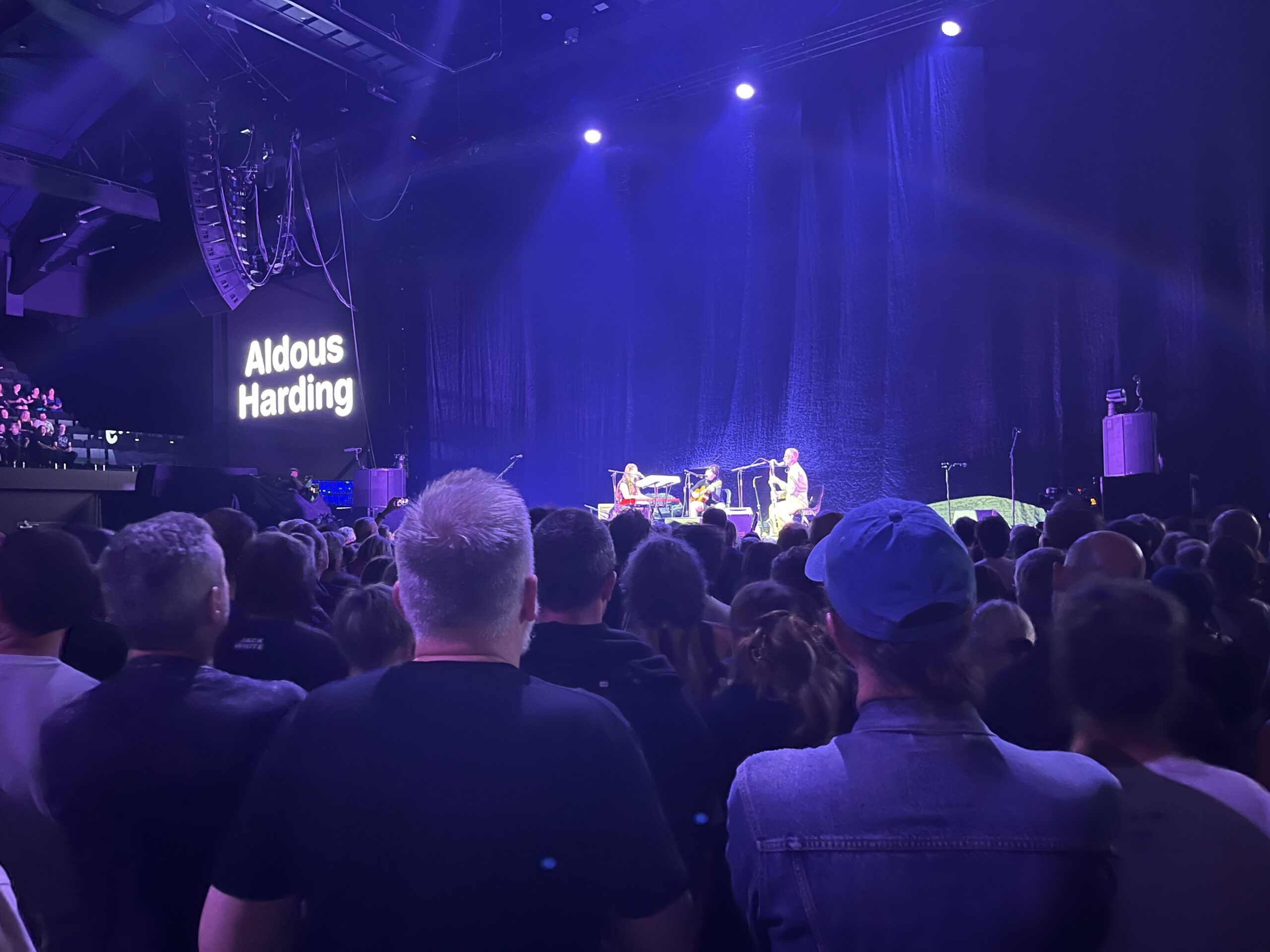
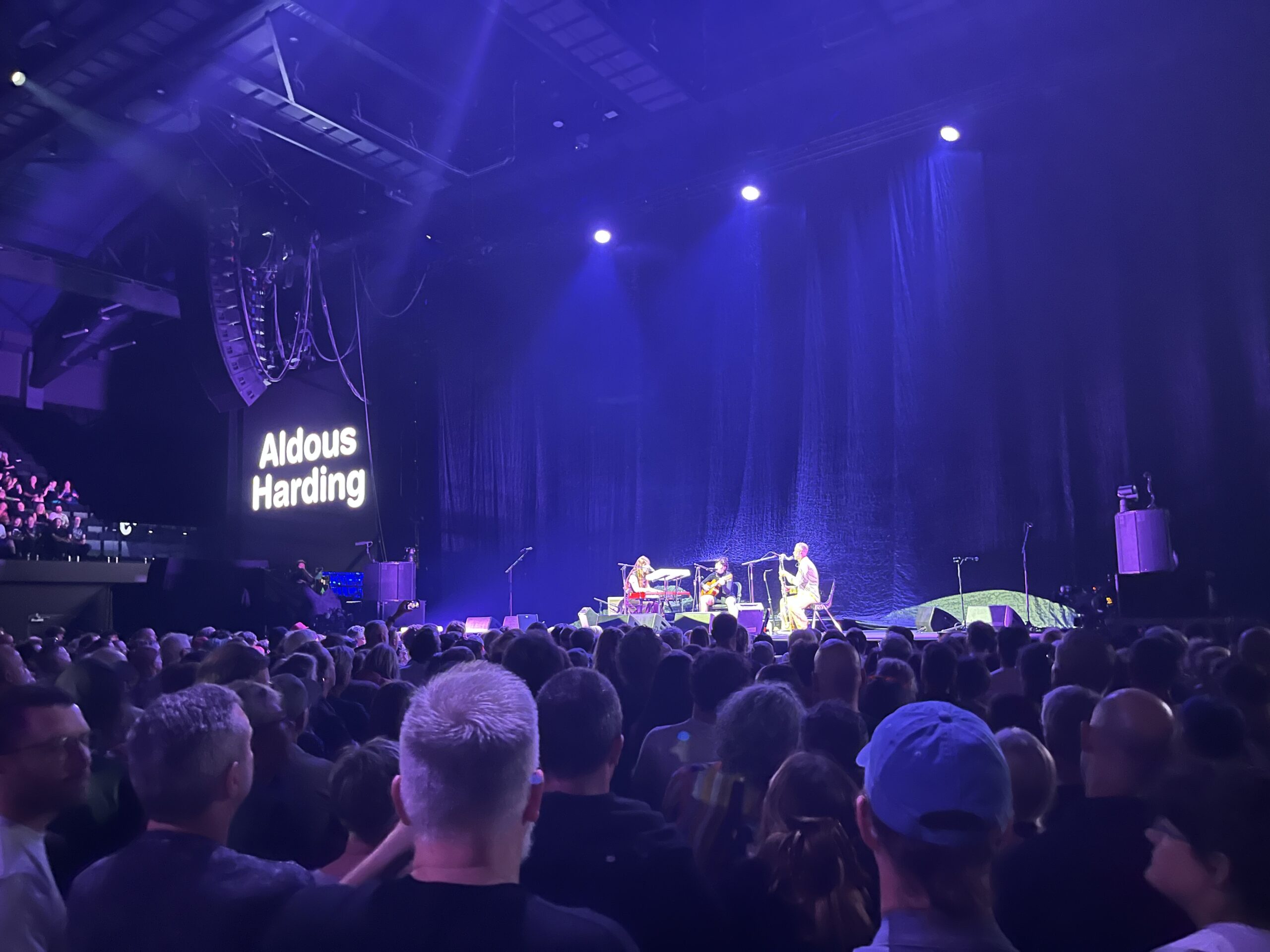
Aldous Harding opened in near minimal conditions: in front of black curtains, with two musicians, and Harding herself dressed in black gym shorts that made her look almost disarmingly everyday. Her brief set of half a dozen songs sat in tension with the arena’s scale. Harding’s voice was precise and close, and what stood out was her ease with awkwardness, the way she allowed silences to stretch between songs, slightly unsettling gaps that felt deliberate and controlled.
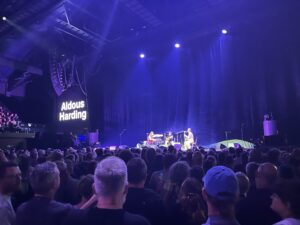
Here Is the Horizon and Warm Chris arrived with an intimacy that felt private, as if the audience had been allowed into something closer to a band practice than a performance. Piano, guitar, and the low breath of woodwind moved quietly around her. There was humour too, offhand and skewed. She seemed to be talking to herself rather than the room when she remarked, “Try not to ruin it,” a line that sharpened the sense of listening to her personal thoughts, and drew us in.
The applause was warm and sustained, and Harding seemed genuinely pleased by it, a beaming smile as if surprised that such inward focus could hold an arena’s attention so completely.
Then she left, and the curtain rose.
Nick Cave & The Bad Seeds
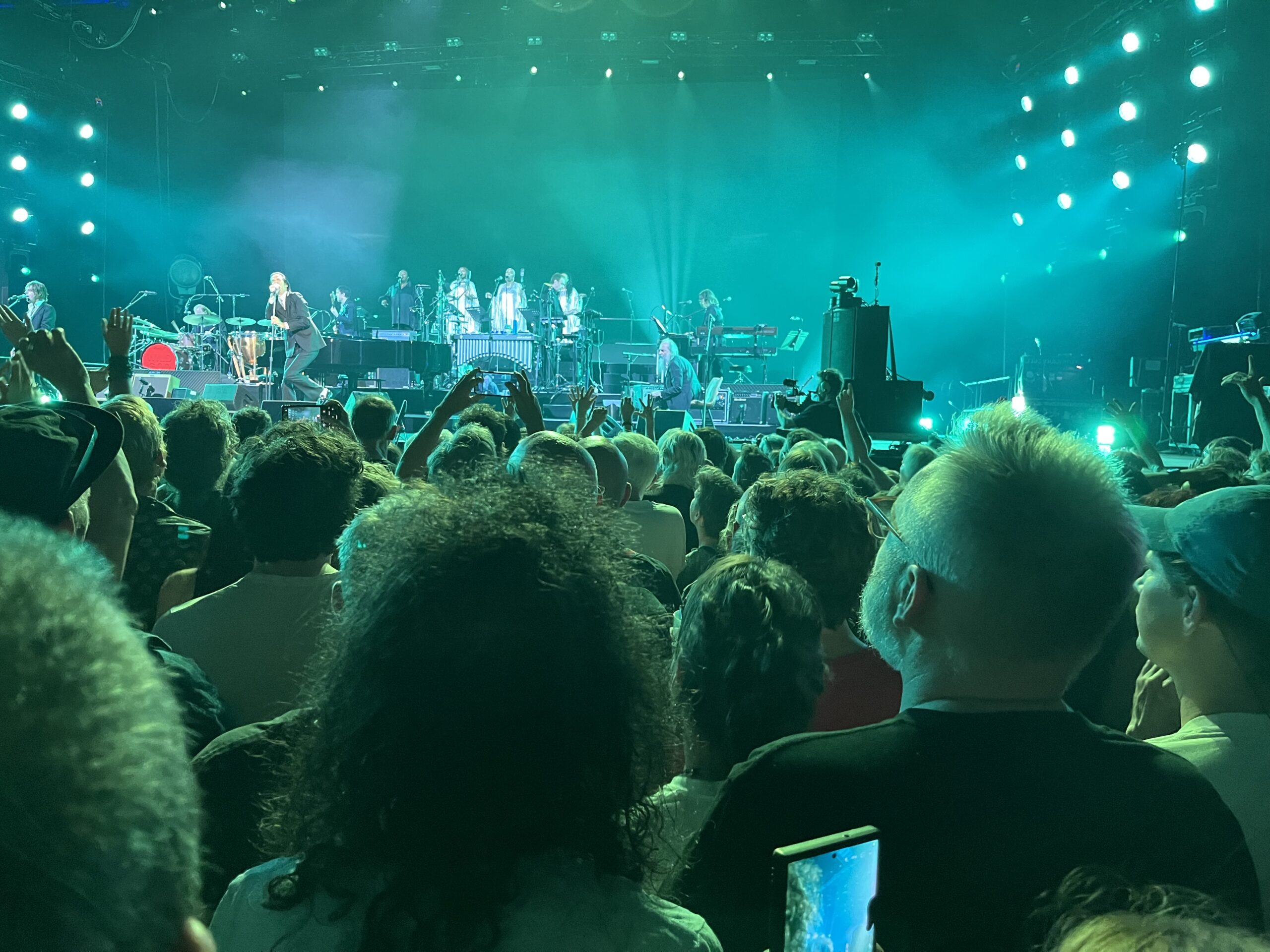
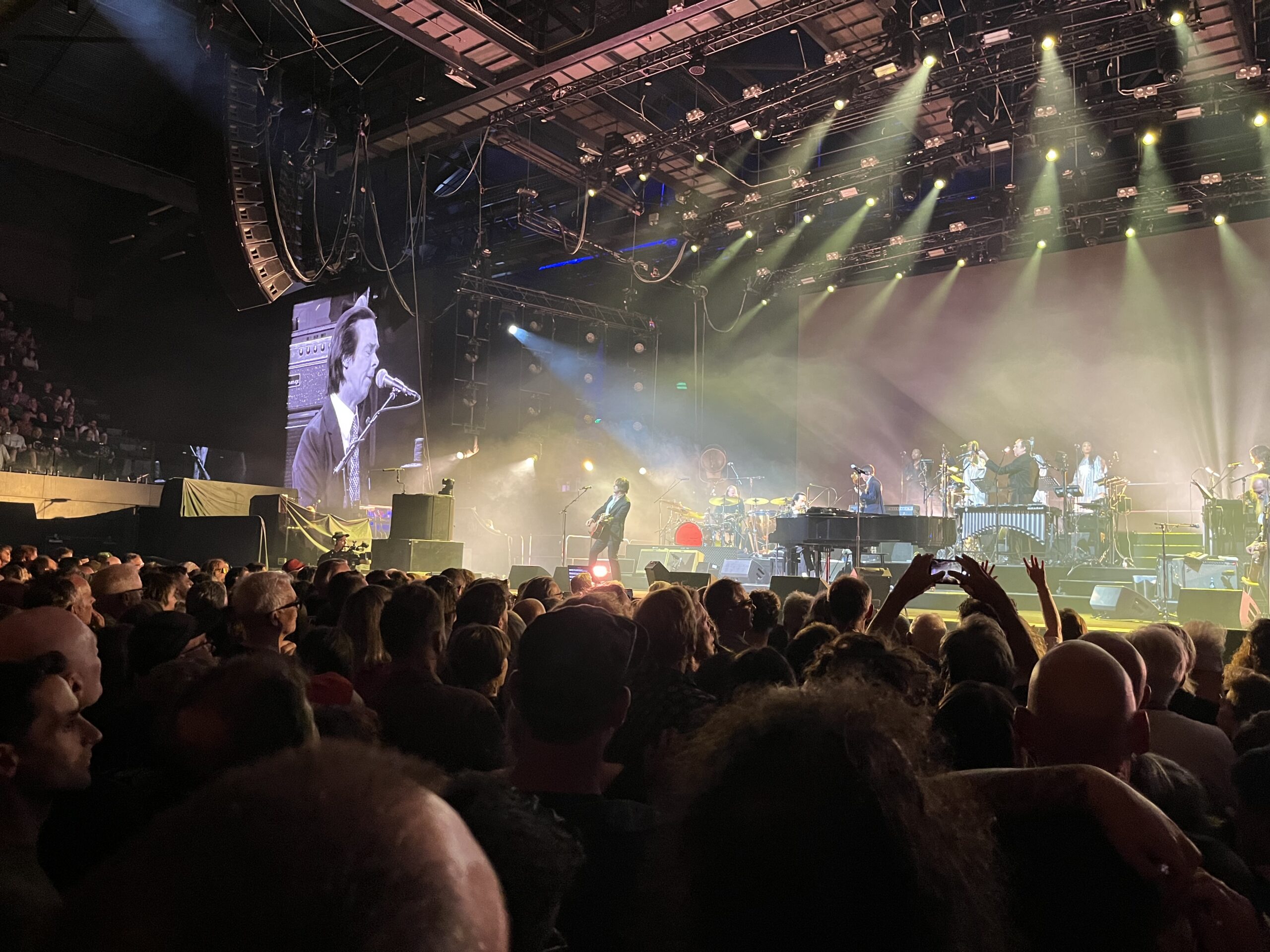
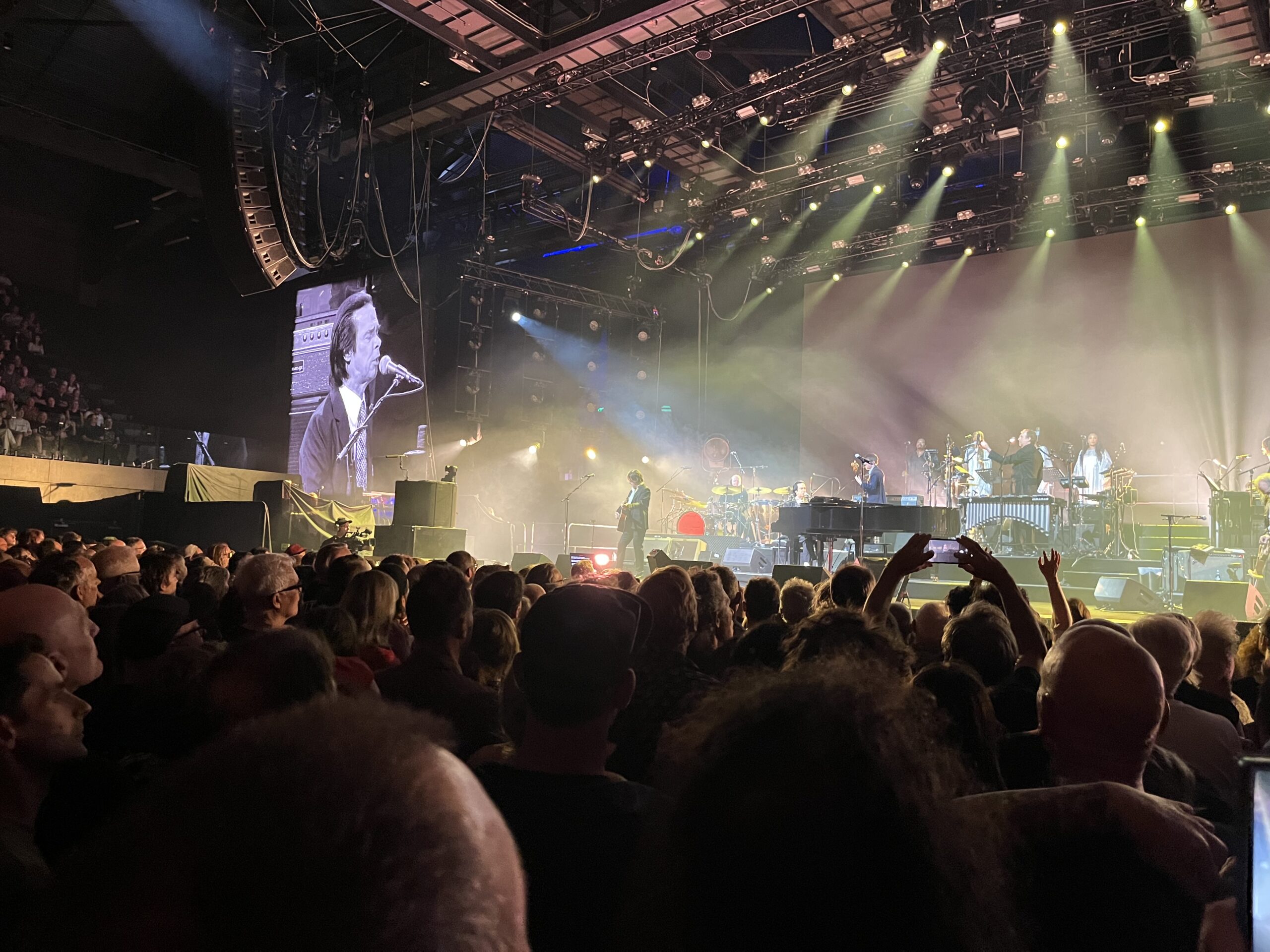
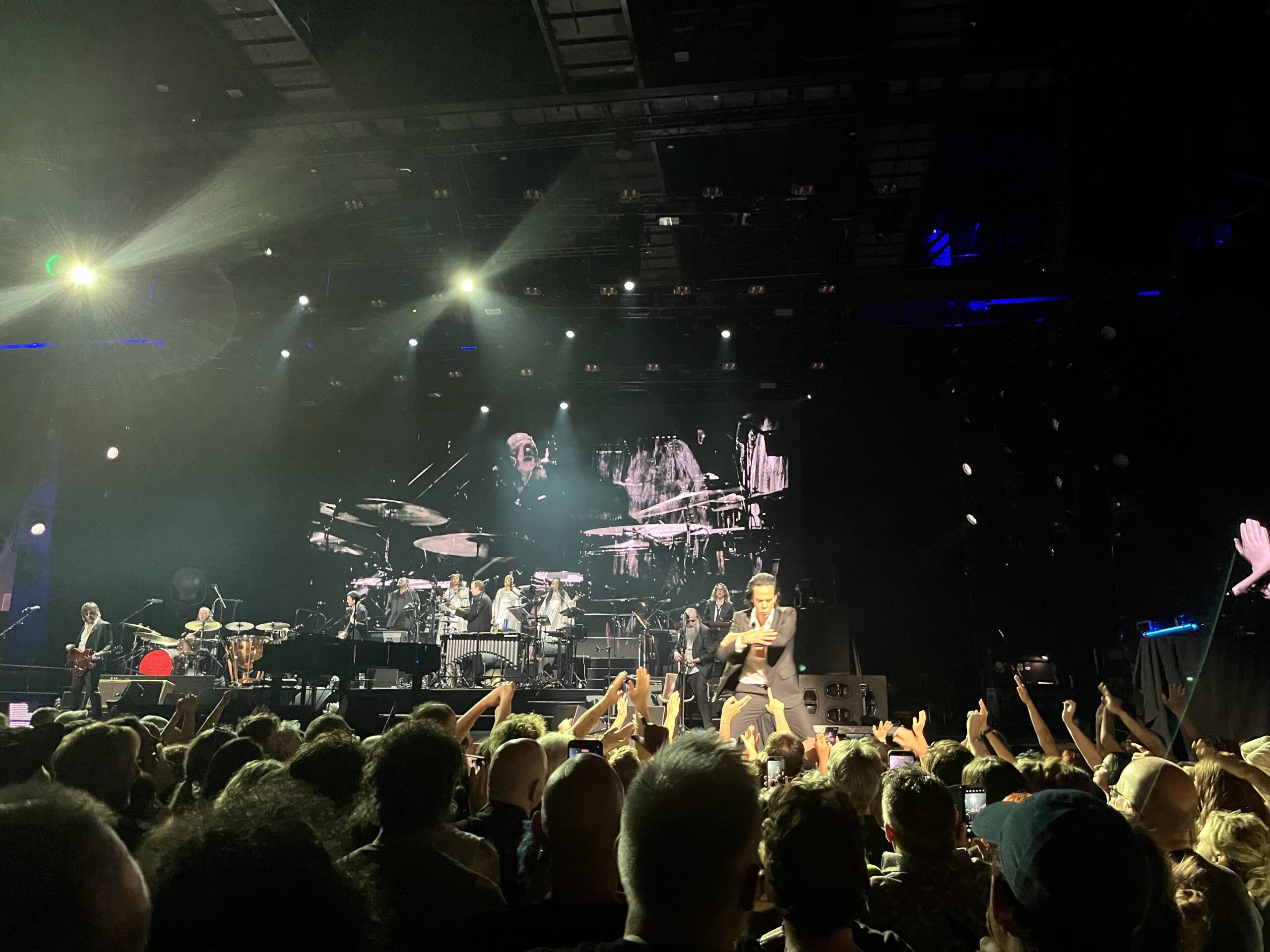
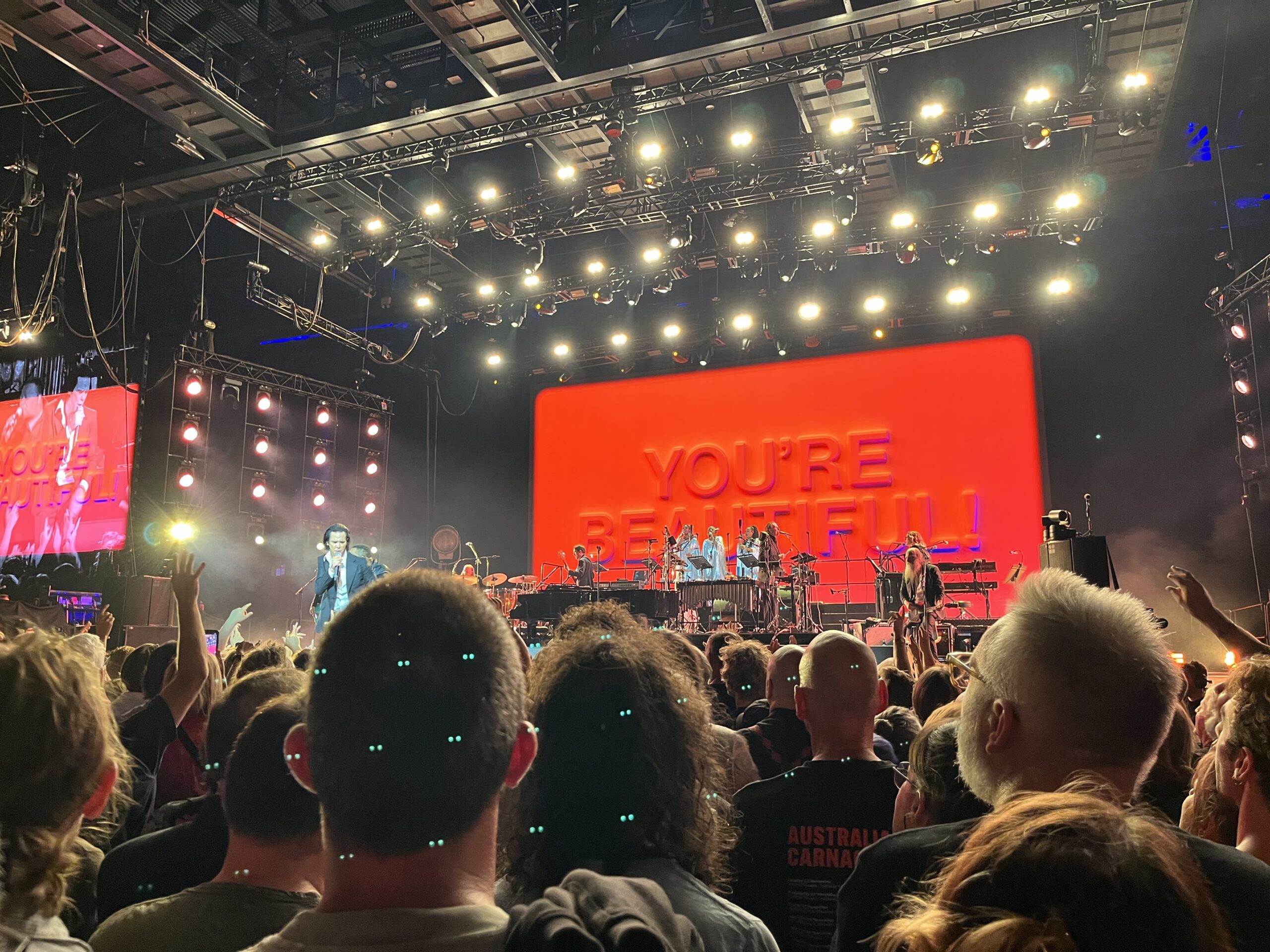
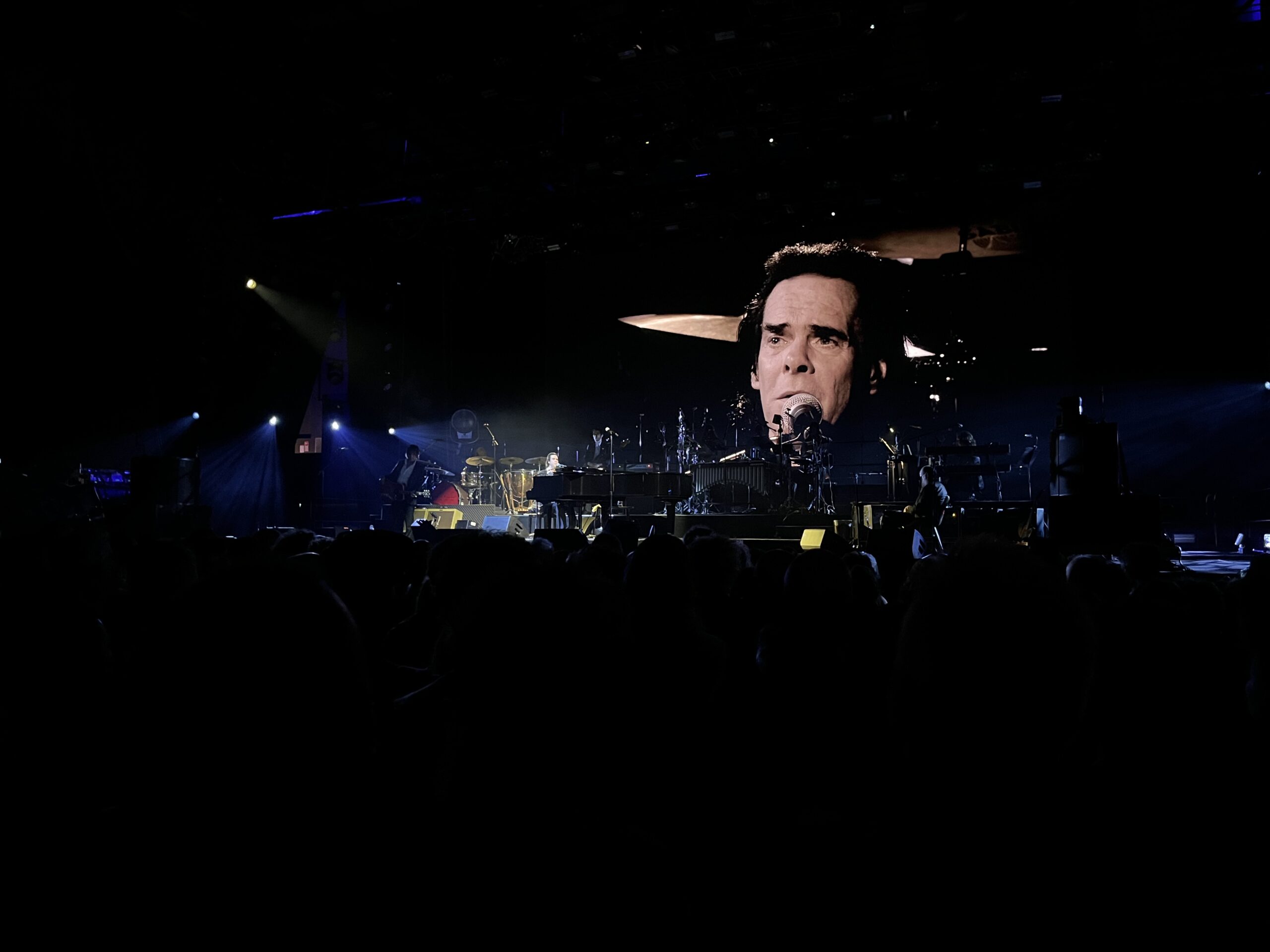
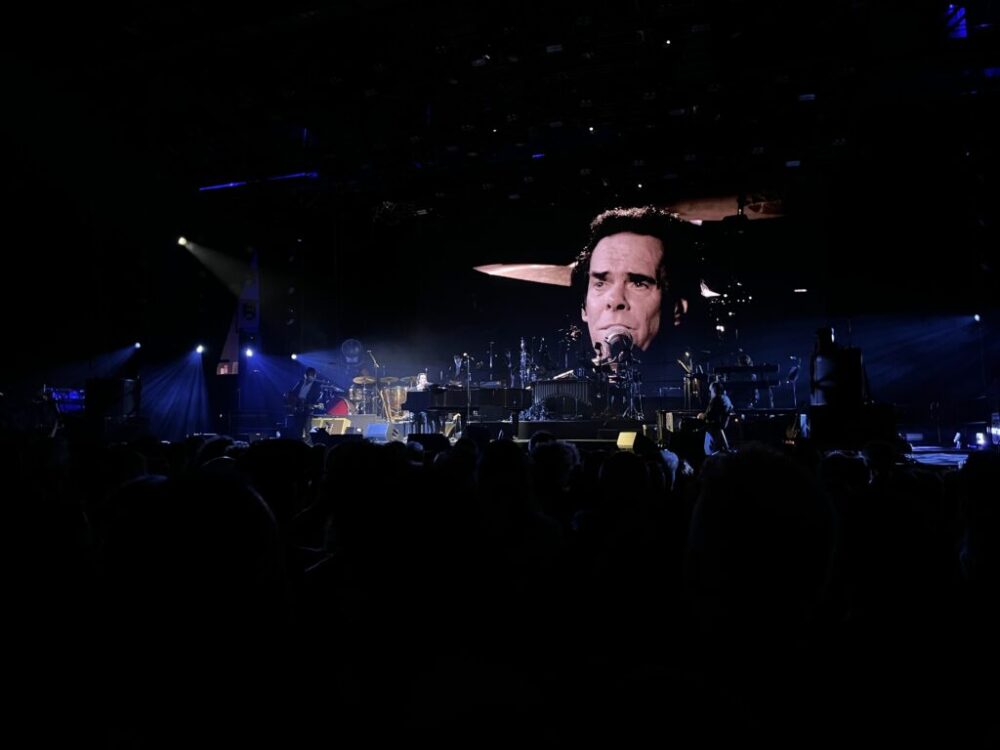
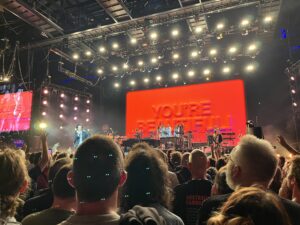
The reveal was abrupt. Behind Harding’s sparseness was the full apparatus of the Bad Seeds’ stage, suddenly exposed. Equipment everywhere, an industrial complex where people came to do serious work. A broad runway of space at the front for Nick Cave to occupy. A grand piano slightly off centre. As the band emerged the crowd surged forward, and whatever tiny gaps that had remained on the floor disappeared. The noise rose as anticipation tightened.
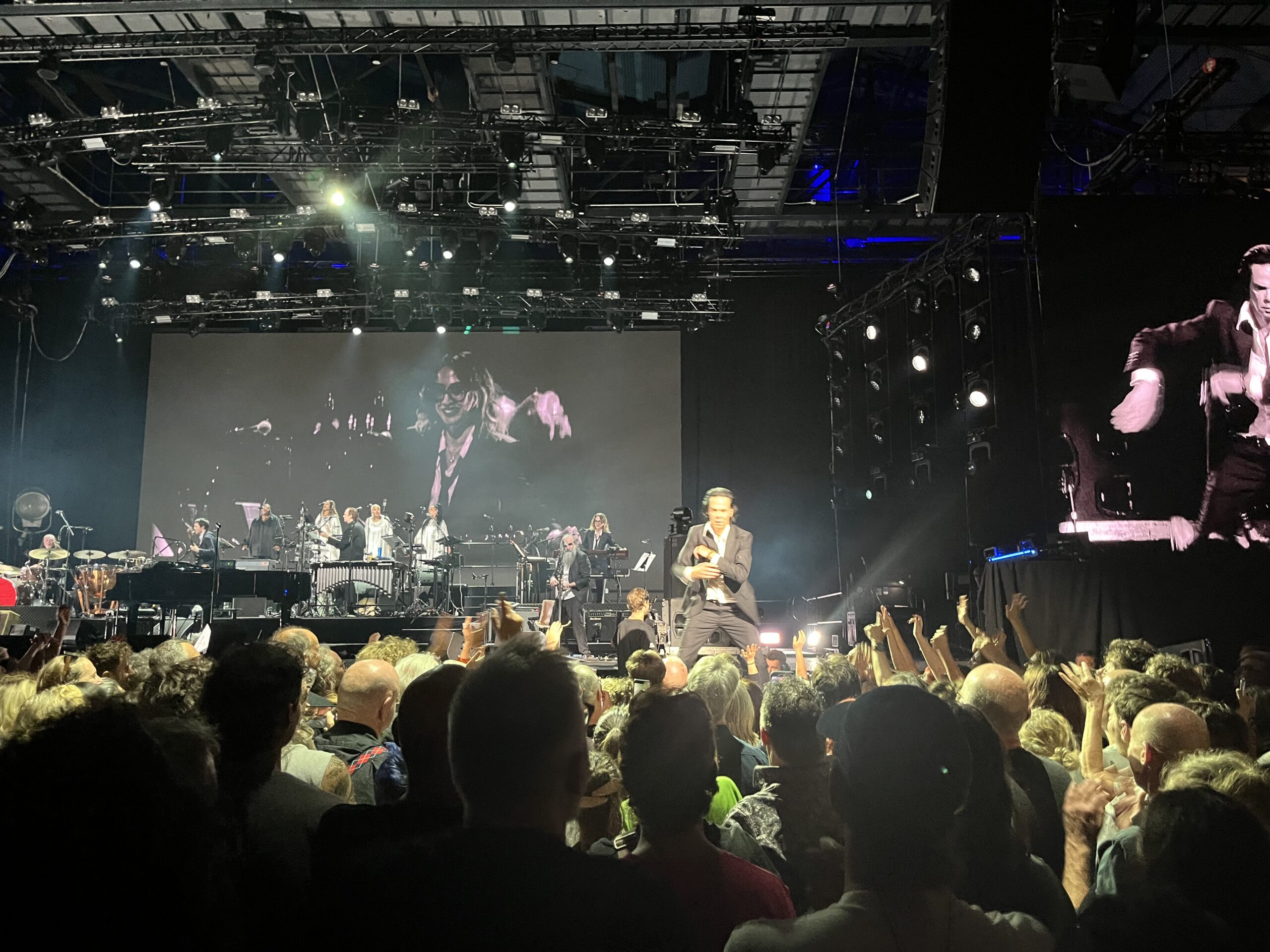
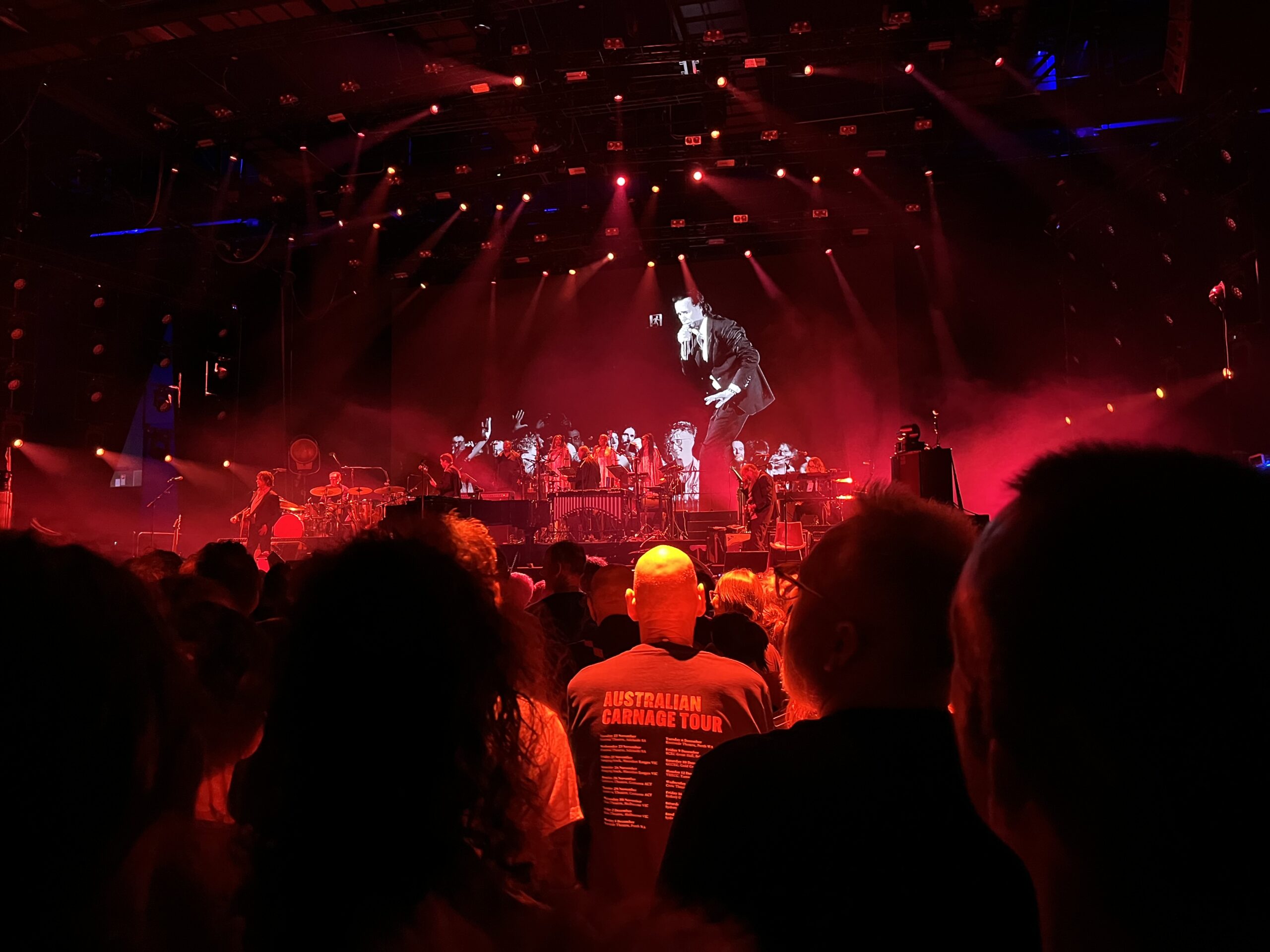
The players took their positions quickly. Warren Ellis to the audience’s right like a restless force. Jim Sclavunos on percussion, standing as if at an altar. George Vjestica with guitar, nuanced and cutting. Larry Mullins behind the drums, steady and dynamic. Colin Greenwood on bass, locking in with Mullins throughout the night. Carly Paradis supporting on keys and arrangement intricacies. And four backing singers, Janet Ramus, Wendi Rose, Miça Townsend in white robe-like outfits, and T Jae Cole in black, completing the powerful visual of a band built for impact.
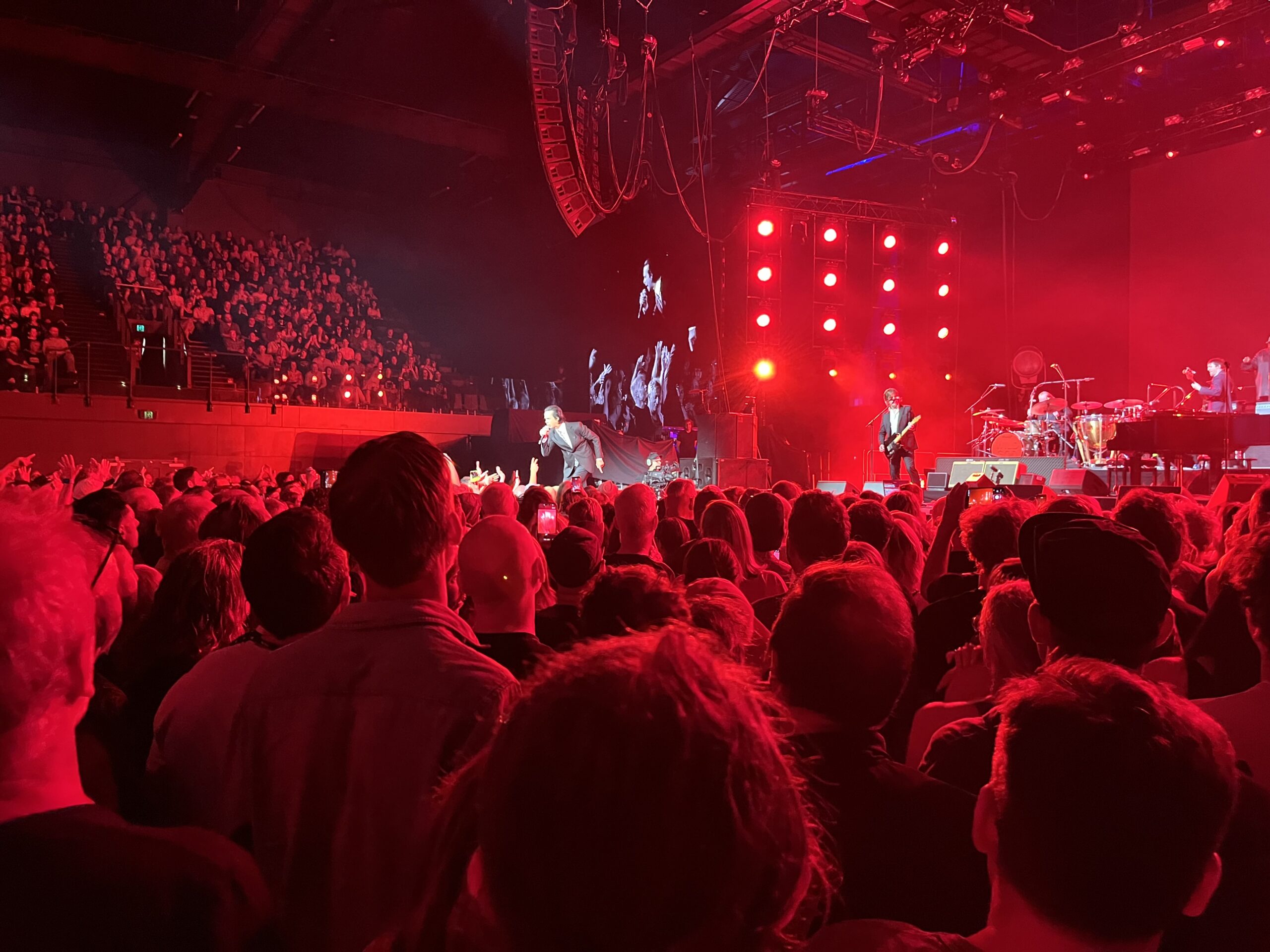
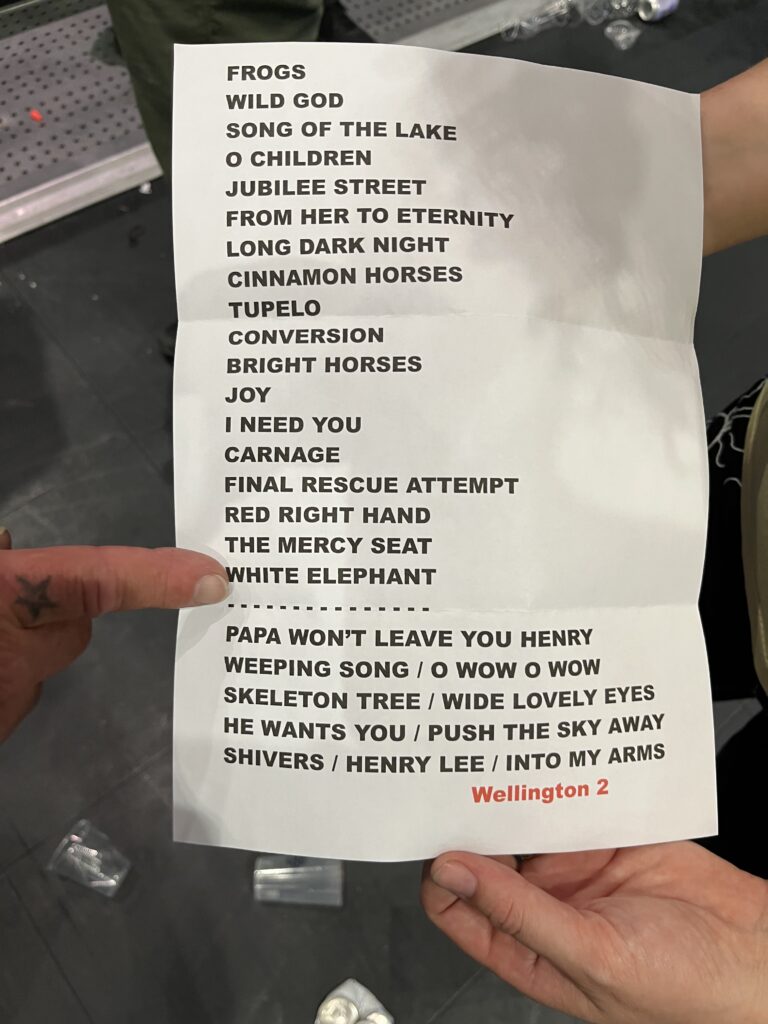
Cave, sharply dressed and controlled, carried authority from the first moment. The set opened powerfully with Frogs, Cave formal at first, tie in place, suit immaculate, but the performance did not stay contained for long. By the third song the tie was gone, the shirt loosened soon after, the evening already shifting from ceremony into sweat and motion.
In contrast, Ellis was dishevelled, half mythic, arms and legs everywhere, frequently contorted as if wrestling with his own instrument. Cave was the preacher and ringmaster, directing the room with precision. Ellis was something Old Testament, ecstatic, unruly, elemental.
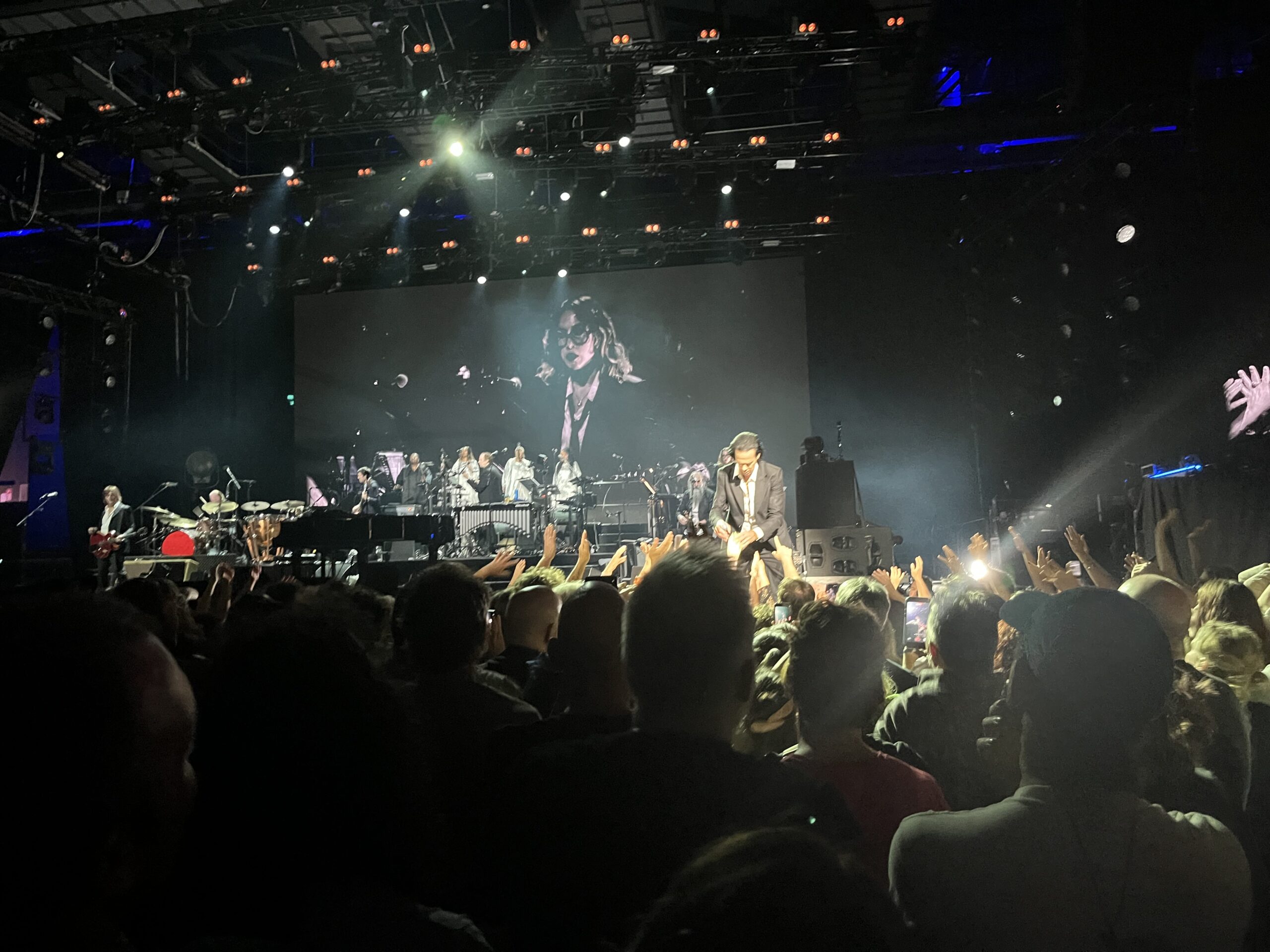
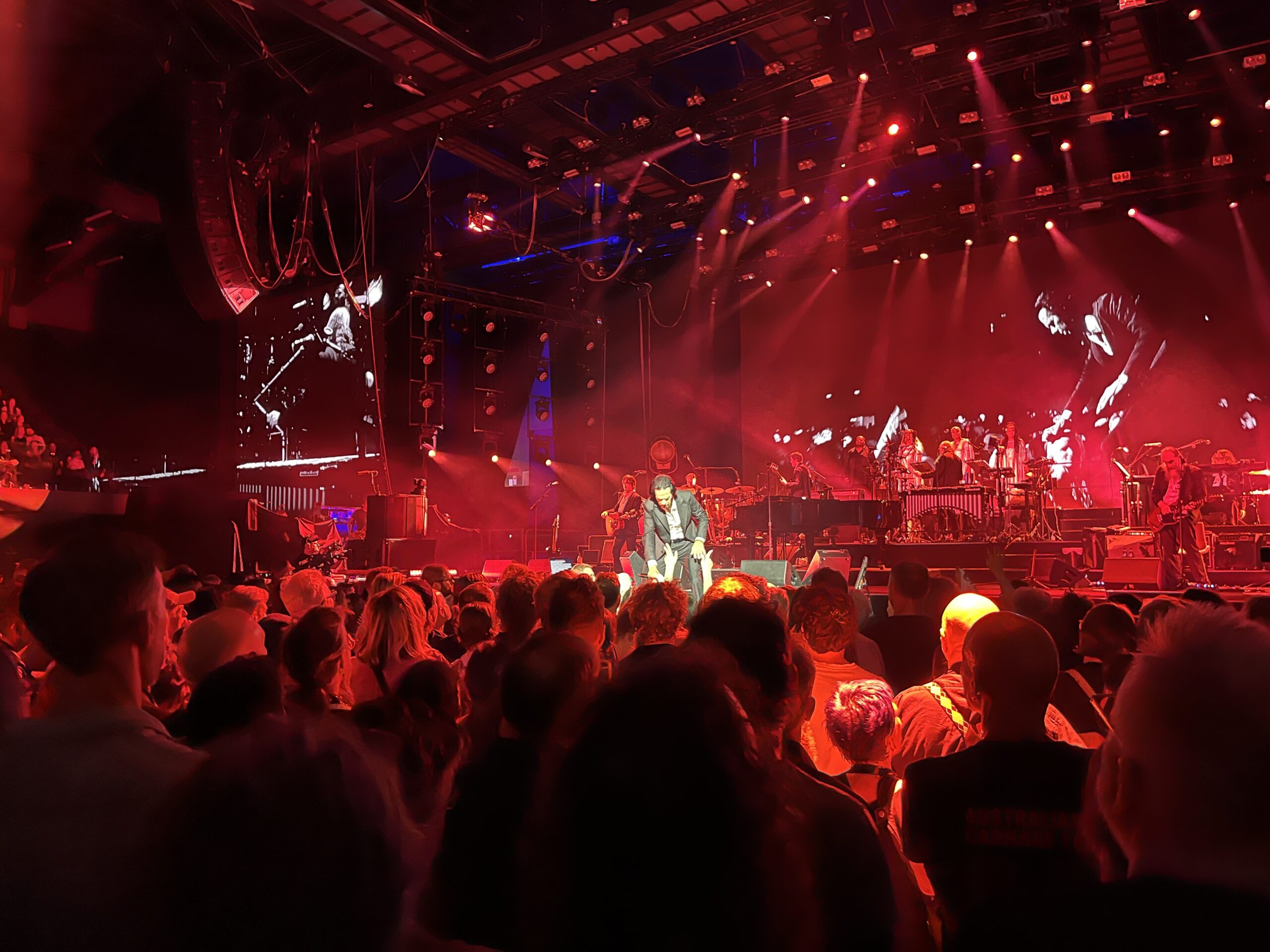
Where Harding had commanded attention through stillness, by leaving space open, Cave commanded it by filling every moment. He moved constantly, within songs and between them, from piano to the very front of the stage and back again, closing the distance, refusing stillness. The Bad Seeds matched his energy, a band of immense control and power, able to turn from thunder to hush without losing shape.
What made Cave so compelling was the way he switched between roles with such ease. He was showman, commanding the room, then pastor, leaning into the microphone with that familiar cadence. On this final night of the Antipodean tour came the frequent refrain of “and for the final time tonight…” as if each song were both offering and instruction. At other moments he became something like counsellor, speaking softly, grounding the scale of the event in ordinary human feeling.
The showman mode arrived vividly when Ellis, at one point, stood up on a chair, calling out “my people,” and threw kisses across the crowd, a flash of absurdity and affection that Cave folded seamlessly into the night’s theatre.
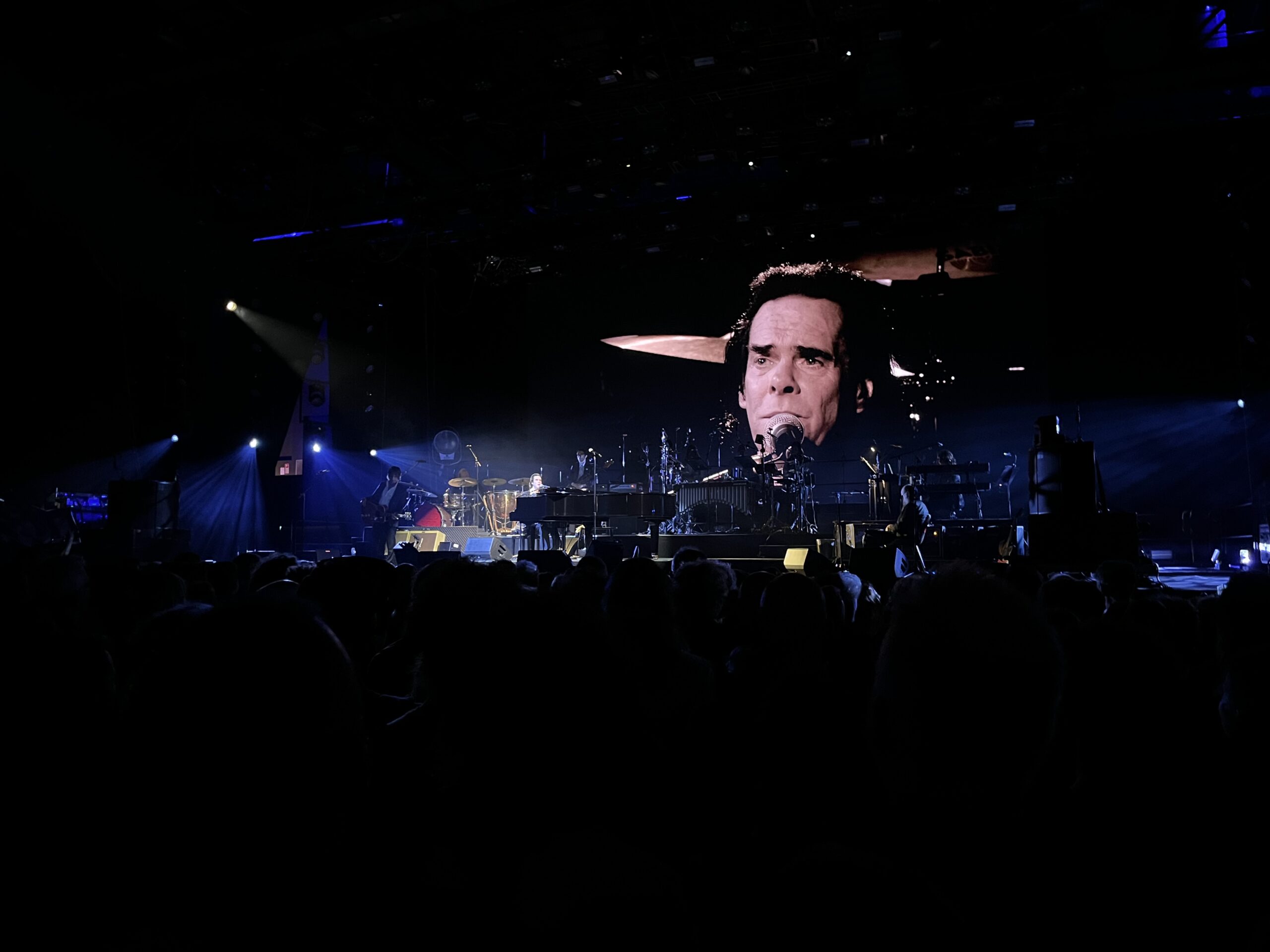
Musically, the set moved in waves. Cave returned to the piano again and again, and some of the evening’s most affecting passages came there. Jubilee Street gathered slowly into something vast. Cinnamon Horses held the arena in a fragile stillness as synths rose behind him. The familiar swing of Red Right Hand brought the room into singalong, while The Mercy Seat expanded from piano rumble into thunder. Other moments hinted at the band’s depth: layered harmonies and rhythmic shifts that made each transition feel purposeful, each arrival full-bodied.
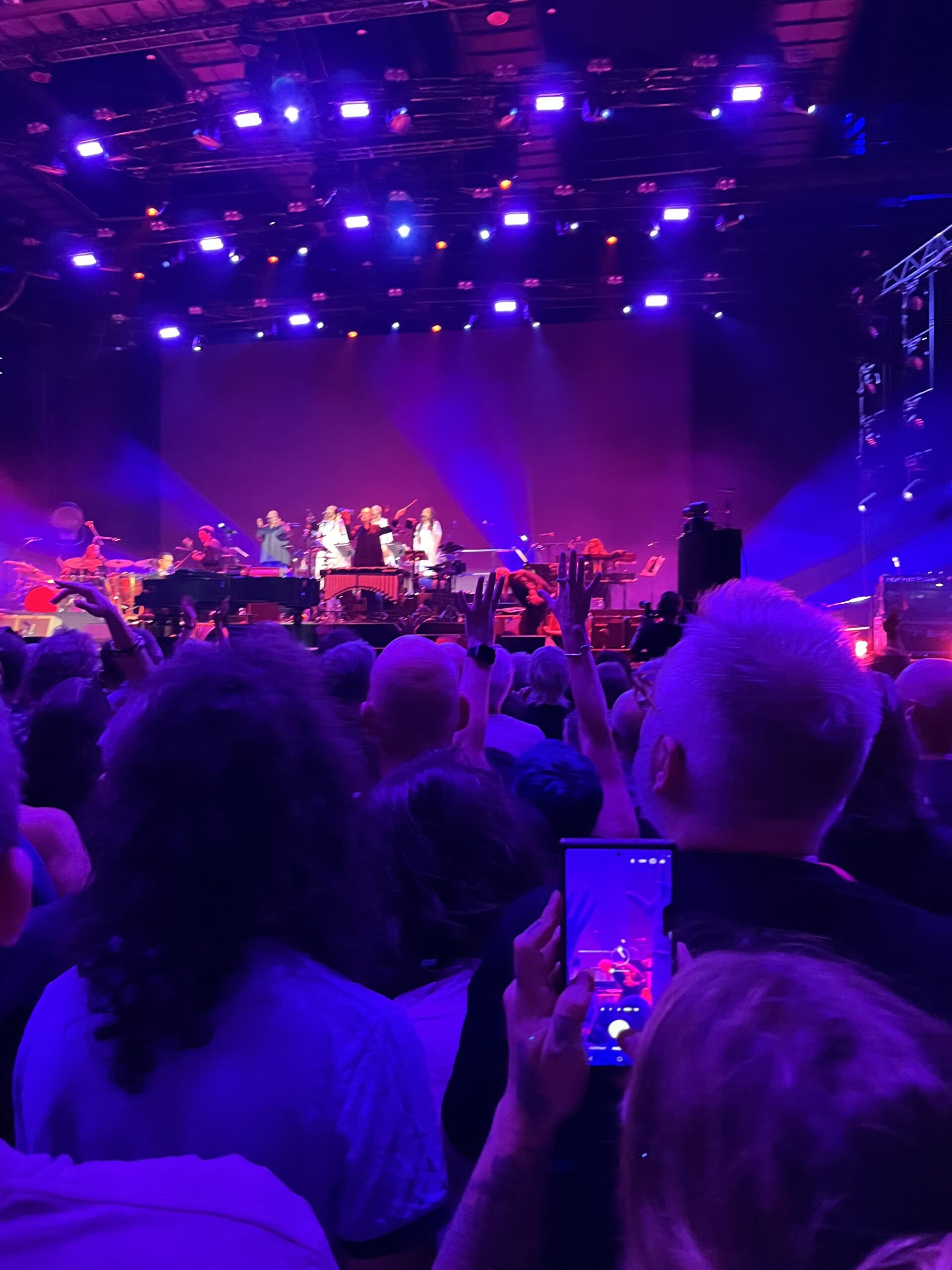
The backing singers were central to the night’s emotional architecture. Initially stationed at the rear like a gospel choir, they stepped down at key moments to become equals with Cave, singing beside him, reaching outward, touching hands, sharing the physical work of connection. Their voices lifted the music into something choral and communal, widening the emotional register each time they entered fully.
The Bad Seeds played for close to two and a half hours in total, and the striking thing was how their intensity was sustained, shaped, and managed throughout. They moved between thunder and hush, exultation and reflection, without losing focus or momentum.
The encores brought intimacy and release. Cave opened with Wide Lovely Eyes, introduced with a small grounding admission: it was a request from his wife. Ramus came next to the piano to duet with him on Henry Lee, a murder ballad made newly tender in its shared delivery. And the evening’s last word belonged to quiet communion: Cave alone at the piano, the crowd singing Into My Arms back to him, a song so gentle and familiar it felt collectively owned.
Afterwards, the spell did not snap cleanly. Along the waterfront bars of Te Whanganui-a-Tara, places were full, tables crowded with people leaning in close, replaying moments, naming songs, trying to put language around what they had just shared. It felt like the music had lifted everyone up, and it took time, conversation, and another drink or two before the night could properly let them go, the salt air and harbour breeze helping to sustain it a little longer.
John Bradbury
Click on any image to view a photo gallery: