
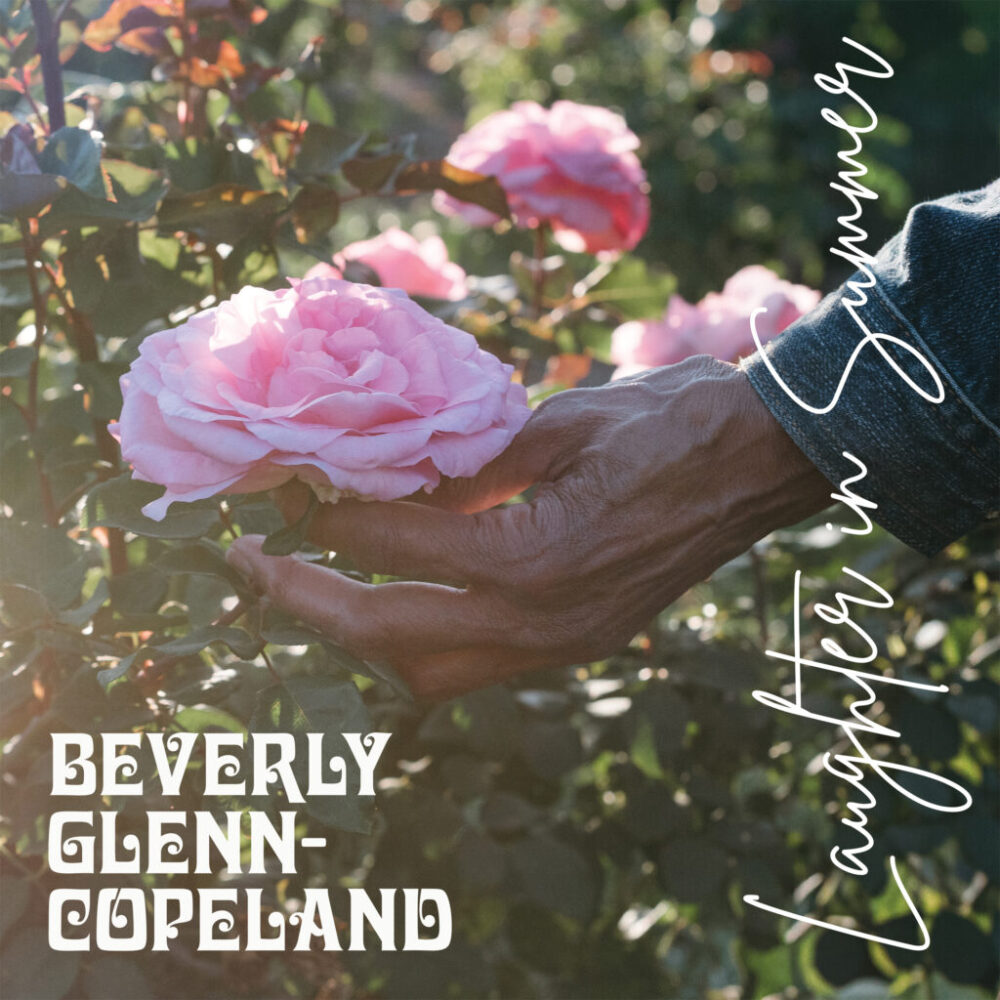
Beverly Glenn-Copeland – Laughter in Summer (Transgressive) (13th Floor Album Review)
Beverly Glenn-Copeland’s Laughter in Summer begins with the sound of a room coming into focus: piano notes placed gently, a voice entering as if in conversation rather than performance.
From the first moments, the album establishes its intimacy. Simple phrases are offered with care, repeated until they begin to feel elemental. The emotions here emerge as they are spoken, sung, and held within the soft framing of piano and clarinet.
For much of his career, Glenn-Copeland has existed slightly out of step with the world’s attention. His 1986 cassette Keyboard Fantasies, long circulated as a cult artefact of electronic and ambient folk, returned in the 2010s to a new generation of listeners. That rediscovery brought admiration from contemporary musicians as varied as Romy of The xx, Blood Orange, and Robyn, drawn to the music’s warmth and quiet singularity. More recently, The Ones Ahead confirmed his voice continues searching for new forms of clarity and grace. In his eighth decade, Glenn-Copeland’s wider story as a trans elder, as an artist whose recognition arrived belatedly, and now as someone living with dementia, inevitably frames the listening. Yet Laughter in Summer feels less like a document of circumstance than an offering of presence and love, personal in origin but universal in reach.
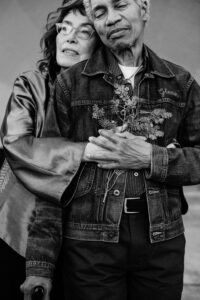
The record is also unmistakably a work of partnership. Written with Elizabeth Glenn-Copeland, his life partner and musical companion, these songs carry the closeness of shared affection rather than solitary reflection. Their voices align with a natural ease, responding to each other with deep understanding. Around them, piano and clarinet anchor the arrangements, while choral voices arrive as warmth and emphasis.
It opens with Let Us Dance (Movement One), a simple count-in and bright piano signalling motion from the first seconds. At times, Glenn-Copeland’s phrasing tests the weight of words, the choir joining behind him until the song becomes both invitation and the beginning of a journey. The clarinet, played with breath-like tenderness by Naomi McCarroll-Butler, threads through the arrangement like a light wind through open air. The road forward has begun.
Throughout the album, the piano of Alex Samaras is steady, repeating figures that feel like firm ground underfoot. Ever New (At Hotel2Tango) welcomes spring and summer rain with hymn-like simplicity, voices swooping wordlessly between verses. The Hotel2Tango setting matters. Long associated with Montréal’s independent music community, it lends these performances a lived in immediacy, as if the songs were being made in the very moment they are sung. By the close, the music thins to occasional notes and clarinet space, conscious of the delicate atmosphere it has created.
The title track, Laughter in Summer, is the album’s clearest expression of memory held close. Rolling keys and Glenn-Copeland’s humming foundation set the base, before Elizabeth enters, higher, careful, almost spoken, stretching “summer” and “remember” into something luminous. The lyrics are plainspoken, almost incantatory: “my heart, my joy, my life, my home on earth.” Piano swells, voices blend, and the song becomes less about nostalgia than about presence.
Midway through, the record narrows to a close chamber setting. Children’s Anthem is offered by just the core quartet of Glenn-Copeland and Elizabeth’s voices, piano, and clarinet, and it carries the intimacy of a blessing spoken in a small room. Silences are left wide enough for the words to rest: “They will travel to a future you and I will never see.” The cadence is deeply sincere, extended toward what lies beyond our own lifetimes.
Harbour turns repetition into refuge. Glenn-Copeland’s deeper tone rises toward “my promise of tomorrow,” Elizabeth replying in a clearer register, the two meeting on the mantra of “all I know.” It lands as acceptance, a calm yielding, as the piano spirals gently beneath them.
Middle Island Lament deepens the album’s palette, exile and loss surfacing plainly. The choral voices return and the music takes on the shape of a folk elegy, its sorrow carried with restraint. The clarinet climbs like a ghostly call through the final lines, grief moving on the wind. It is the saddest moment on the record, and it widens the album’s tenderness into something historical and communal.
From there, the album opens into shared tradition. Shenandoah is sung slowly, each line left to echo in silence, and Prince Caspian’s Dream (At Hotel2Tango) offers the album’s clearest credo: “Life is the heart of love.” Laughter and weeping are held within the same ebb and flow, days given gently into love’s keeping.
The closing Let Us Dance (Movement Two) returns to the road, piano brightening then darkening in alternation, the choir echoing “down the road,” turning the journey into something shared rather than solitary. The final gesture is motion rather than farewell.
Laughter in Summer is a profoundly moving piece of work, where love is made universal through the careful use of breath, piano, clarinet, and voices gathered close. It does not seek to dramatise feeling, but to live it, sing it, and share it. A circle of voices carries the listener forward, down the road, into the quiet strength that comes from being held, and holding others in return.
John Bradbury
Laughter In Summer is out now via Transgressive Records