
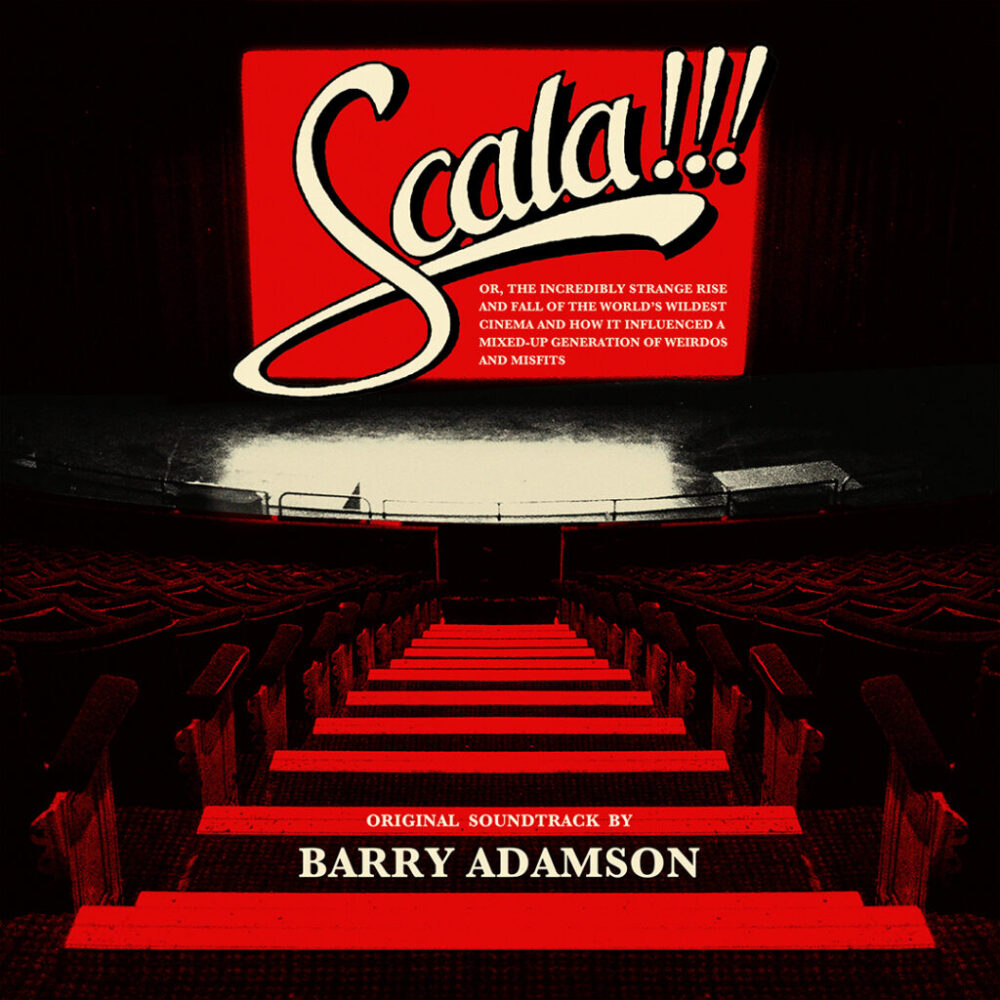
Barry Adamson – SCALA!!! (Mute) (13th Floor Album Review)
Barry Adamson’s SCALA!!! arrives as a love letter to a building that introduced, educated and immersed many in non-mainstream cinema.
The album brings to life again the much loved North London venue that loomed large from the late 1970s to the early 1990s. Emerging from the same era, Adamson has carved a singular place in British post punk’s afterlife. From the tensile intelligence of Magazine, through the formative early years of Nick Cave & The Bad Seeds, to a solo catalogue steeped in noir, dub and urban unease, he has consistently treated music as narrative and atmosphere rather than display. His finest work, most notably Moss Side Story, has always felt cinematic. SCALA!!! finds him returning to that instinct, composing a score that honours both the films themselves and the experience of discovering them together.

For those who passed through its doors, the Scala was a place of eclectic double bills, all nighters that blurred into daylight, and cult programming that left a lasting mark. Its repertory moved freely and deliberately between European art cinema, underground classics and American transgression, drawing an audience eager to explore the edges of what cinema could be. The venue also doubled as a live space, hosting early gigs by bands including Spandau Ballet, before the New Romantic movement took over the charts. Adamson captures the sense of curiosity on arrival, the anticipation in the auditorium, and the excitement of discovering something new and unusual with strangers, before tumbling back into the world again.
The opening movement immediately places us inside a film, the star of which is the cinema itself. SCALA!!! (Opening Title) surges forward on ominous synths and rolling drums, tension building as guitars ring out and then fall away, leaving rumble and echo hanging in the air. It feels like the doors opening and the lights dimming. Timelines arrives already in motion, guitars and drums mid flight, as if the night has been underway for hours, its lingering notes suggesting memories forming as events unfold. That sense of place is reinforced by One Of Us / Sticky Floors Atmos, which highlights the rough, worn reality of the album’s central character.
From there Adamson guides us through shifting references, weaving real people and cultural touchstones into the score. Scala Posters pulses with urgency, high synth figures flashing like torn flyers on brick walls. As Steve Woolley Sees It slows the pace and darkens the frame, brooding and contained, a nod to Stephen Woolley, the Scala’s co-director. Woolley went on to produce and direct films including The Company of Wolves and The Crying Game, carrying the cinema’s eclectic taste and love of risk into a wider film making career. Babs Johnson Is Divine tips its hat to Divine, the singular presence at the heart of John Waters’ cinema and a recurring programming choice at the Scala, its easy swing reflecting the venue’s embrace of camp, provocation and outsider glamour. Iggy And Lou And Mick Rock Too circles in echo and restraint, invoking Iggy Pop, Lou Reed and Mick Rock, whose photographs helped define the visual language of rock culture, linking performance, attitude and image making in a way the Scala consistently foregrounded. That crossover into style and youth culture is echoed later in Spandau Politics, a brief, low-budget New Romantic shimmer that recalls the band’s early appearance here, whilst still developing their sound.
The album’s middle stretch deepens into night. Latex Gloves moves in stuttering rhythms, low notes answering each other with measured tension. Acid Celluloid suspends time in droning echoes, while Scala Cats introduces a jazz inflected shuffle that feels alert and nocturnal. Barry’s Iranian Embassy Blues shifts the pulse into something more danceable and sustained, its extended groove fragmenting and reforming before locking back in, grounding the album at its centre.
As dawn approaches the music grows reflective while retaining momentum. Another All Nighter carries the sense of endurance that defined the Scala’s midnight to morning marathons. King’s Cross Skyline looks outward, tracing the city as it wakes and audiences step outside, adjusting their eyes to early morning light and empty streets, their frame of reference shaped by what they have just seen.
The closing stretch signals the end of the show. The Party’s Over lets bright keys drift lightly over a fading drone, while SCALA!!! (End Title) mirrors the opening with slower assurance, drums holding the shape as brass and Hammond swell and recede, allowing the night to come gently to a close. The final burst of Scalarama (Outtake) plays exactly as it is named.
SCALA!!! stands alongside Moss Side Story as one of Adamson’s most complete statements, music that understands how places shape people, and how images and memories made on nights like these stay with you long after the screen goes dark.
John Bradbury