
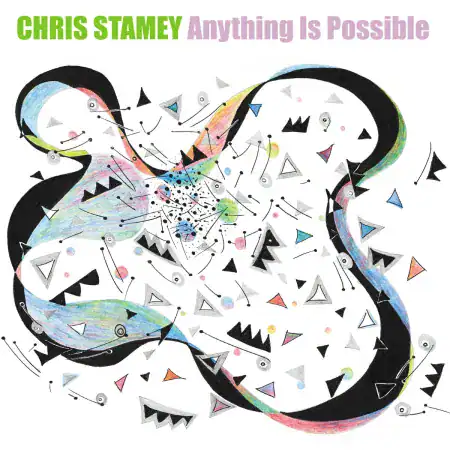
Chris Stamey – Anything Is Possible (Label 51 Recordings) 13th Floor Album Review
On his latest album Anything Is Possible, Chris Stamey, a founding member of The dBs, finely crafts a record of musical memory, stitched together from echoes of past masters, fleeting lyrical references, and the enduring emotional architecture of classic pop.
Across eleven tracks, Stamey channels a lifetime of listening, reflecting, and reinterpreting, bringing the ghosts of Brian Wilson, David Bowie and others from earlier in the twentieth century into the present.
The calibre of collaborators on Anything Is Possible speaks volumes about the esteem in which Stamey is held within the musical community. Across the album, he is joined by kindred spirits like The Lemon Twigs, whose layered harmonies enrich several early tracks, and Marshall Crenshaw, whose appearance on Meet Me in Midtown injects vintage power pop swagger. The album also features contributions from a host of respected musicians, including members of Wilco, The dB’s, and Brian Wilson’s touring band, adding further polish to the arrangements.

From the opening track, I’d Be Lost Without You, Stamey sets a tone of earnest classicism. “I’d be lost without you, tangled up in blue”; he sings, invoking Dylan as emotional shorthand for love and confusion. High and clear vocals ride above echoing drums and harmonies that shimmer. The song’s structure is deceptively simple, punctuated by stops and starts that give it a soft grandeur.
The title track, Anything Is Possible, is a sonic and lyrical tapestry. From the first bars, Beatlesque motifs abound, there are melodic turns, lyrical references (“I heard the story on the news today”), and the sonic palette of mid-period McCartney.
After All This Time slows the tempo to a contemplative sway. Keyboards give way to restrained guitar, while Stamey’s clear and quietly authoritative vocals float above a swelling arrangement. The lyrics unfold like a letter unsent, “Unable to return your picture to its frame”, a graceful image of emotional stasis. As the instrumentation glides and recedes, the passage of time is evoked.
Then comes the brash, brass tinged invitation of “Meet Me in Midtown.” It bursts open with crashing guitars and a trumpet line that dances through a polished power-pop arrangement. It’s the album’s most upbeat track, offering a “place we can chase away our blues” and culminating in an irresistible sing-along. Yet beneath the exuberance is a yearning for a private space in a bustling city.
The Brian Wilson cover Don’t Talk (Put Your Head on My Shoulder) is tackled with reverence and subtle reinvention. Led by strings and voice, the arrangement carries fragility, drama, and tension. It feels that the song could collapse under the weight of its own quiet longing, with the title sounding less like an offer than a plea.
When My Ship Comes In slows things further, letting brass and strings breathe. Its beauty lies in restraint: gentle textures and a vocal delivery that is apprehensive, as well as hopeful. The slow pacing mimics a dream of reunion deferred.
There’s uplift in In a Lonely Place, where drums and guitars come forward, and the springy rhythm gives it a sense of defiance. Elsewhere, Once, On a Summer’s Day stretches time, piano notes punctuating a slow shuffle, while brass weaves emotion through the spaces in between.
Done With Love swings playfully, listing grievances against romance but delivering them wryly. A mid-song keys interlude lightens the mood. “Au Revoir and Goodbye” begins dramatically before drifting into a fairground waltz, a violin solo, and woodwind flourishes that shift the tone.
The album closes with Leaves in the Wind, which is gentle, meditative, and pastoral. The rhythm sways with subtle shifts, bass guiding it forward. The lyric “another time, another place / a love that time cannot erase” could stand for the entire album, the way popular music is always echoing somewhere between then and now, looking hopefully for something in the past to move us forward.
In Anything Is Possible, Stamey revisits musical history from the ‘60s, ‘70s and earlier, converses with it, and brings the past alive with his present day collaborators. The result is a deeply felt remembrance that popular music is an emotional archive, full of gems that can be polished and made new.
John Bradbury
Anything Is Possible is out now on Label 51 Recordings
