
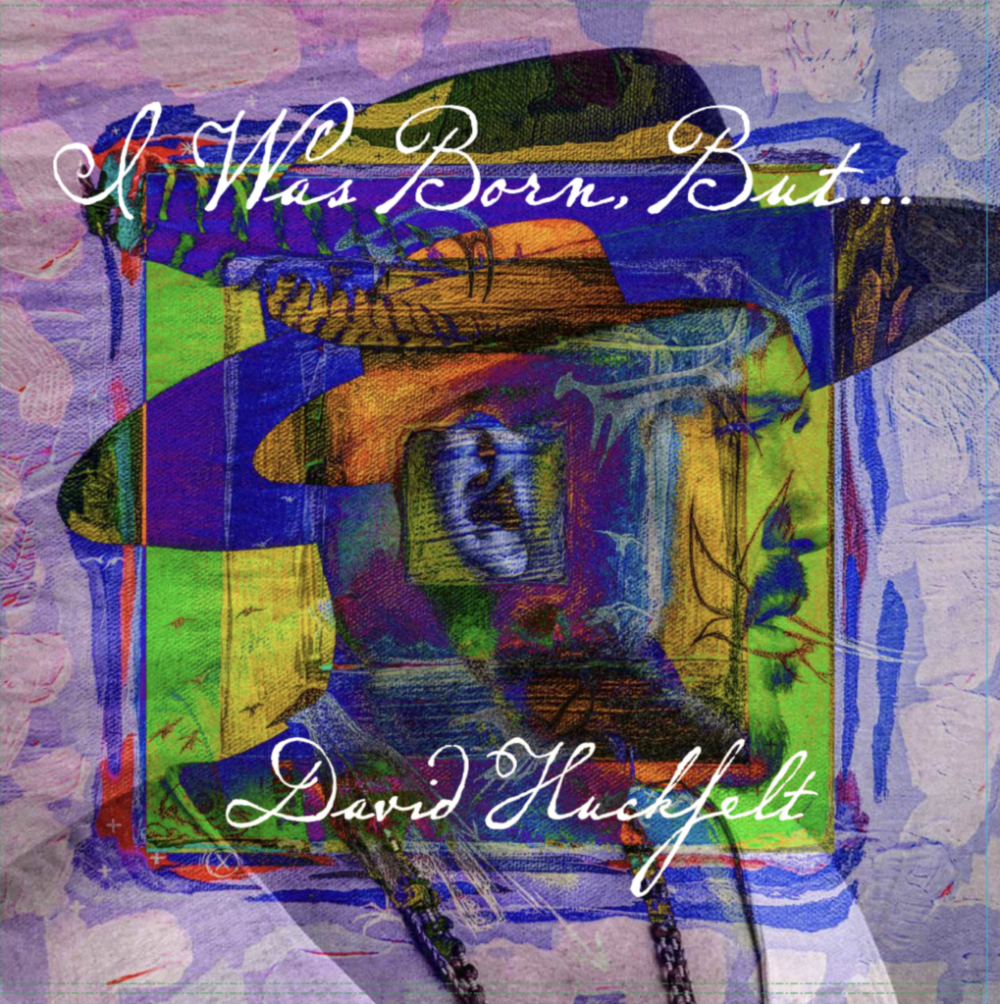
David Huckfelt – I Was Born, But… (Don Giovanni) (13th Floor Album Review)
David Huckfelt’s I Was Born, But… unfolds as a carefully shaped narrative built from the songs of others, drawn together into a coherent and immersive statement.
Over an hour in length, Huckfelt turns to work by Bob Dylan, Adrianne Lenker, J.J. Cale, Gordon Lightfoot, Jackson Browne, Tom Petty, Warren Zevon, Pieta Brown, Howe Gelb, Dan Reeder, and others, arranging it into a portrait of America that feels reflective, restless, and quietly searching. The album’s sequence gives the material a renewed attentiveness to where the country has come from, where it is now, and how it continues to move.

The album title sets the tone. I Was Born, But… is an unfinished thought, an opening rather than a conclusion. It suggests identity as something inherited and then reshaped through experience. That sense of openness is echoed in the album artwork, where layered colours and partially obscured figures resist easy definition. This is an album concerned with transition, memory, and how meaning is shaped through listening.
Huckfelt’s long history matters. Through his work with The Pines and across a substantial solo catalogue, he has consistently explored American song as a living tradition, one capable of holding spiritual doubt, political unease, and human tenderness at the same time. That sensibility runs through these fifteen songs, supported by a large, trusted, responsive band and shaped in collaboration with co-producer and guitarist Jeremy Ylvisaker, whose influence is felt in the album’s restraint, pacing, and emphasis on feel.
The opening track, Changing of the Guards by Bob Dylan, establishes the album’s shape. It begins with gently picked guitars, bass, and a shuffling rhythmic pulse before slowly accumulating weight through echoing slide guitar, droning synthesisers, and layered vocals. The song moves at a measured pace, its imagery unfolding like history observed rather than announced. In the final verse, the arrangement briefly strips back to stray notes and rattling percussion before the full band returns, reinforcing the sense of an unsettled world in motion.
From that wide view, Huckfelt turns inward with Anything, written by Adrianne Lenker. Slow strummed and picked guitar create a softly droning space for his voice, allowing the lyrics to land with remarkable clarity. When the arrangement drops to little more than voice and a simple strum, the song becomes an act of attention, focused on presence and belonging. It underscores the strength of Lenker’s songwriting and grounds the album in human intimacy, offering shelter within the larger forces introduced earlier.

Movement follows. Any Way the Wind Blows, by J.J. Cale, brings rhythm to the foreground. Built around a repeated chord and a steady forward pulse, the song relies on groove. Harmonica adds grit, drums shuffle underneath, and Huckfelt’s vocal sits clearly on top, reciting the story with calm assurance, a way of navigating uncertainty carried in story rather than instruction.
That balance between motion and reflection continues through the album’s key anchor points. I’m Alive, written by Jackson Browne, unfolds slowly, its strummed guitar and weathered vocal delivery capturing a quiet astonishment at continued survival. Early Morning Rain by Gordon Lightfoot introduces distance and longing, its gentle guitar lines underscoring the ache of separation and movement seen from the margins.
Later, Two Gunslingers by Tom Petty brings a questioning edge. Intricate guitar lines, echoing spaces, and subtle synthesiser tones evoke western imagery while interrogating inherited ideas of conflict, control, and masculinity. Near the end of the album, Who Do You Love? by Bo Diddley provides a looser, more physical release, a surge of celebratory communal energy.
Across the record the emotional terrain deepens with questions of endurance, history, and humility recurring through, arrangements that privilege space and feel. Guitars trade lines cleanly, percussion guides momentum, harmonica or fiddle adds lightness, and the music consistently leaves room for words to resonate.
Throughout I Was Born, But… each song stands securely on its own, yet together they form a sustained experience that rewards full immersion. Huckfelt trusts feel and placement to do the work, allowing meaning to emerge gradually across the album’s running time. The result is a record that explores America’s songbook and responds with care, offering companionship rather than certainty, and inviting the listener to reflect on how they might choose to complete the album’s title.
John Bradbury
I Was Born, But… is out now via Don Giovanni Records