
Dry Cleaning – Secret Love (4AD) (13th Floor Album Review)
Dry Cleaning’s Secret Love builds on the band’s established approach to emotion, one shaped by distance, observation, and restraint.
From the taut observational cool of New Long Leg through the broadened textures of Stumpwork, Florence Shaw’s voice has functioned less as a conduit for emotion than as a surface upon which the modern world could leave its marks. On Secret Love, however, something subtly but decisively shifts. The focus remains, but the distance has narrowed.

That shift is carried by the full band as much as by Shaw. Tom Dowse’s guitar chimes and scrapes, Lewis Maynard’s bass provides a physical anchor, and Nick Buxton’s drums establish rhythms that march, shuffle or hover. The playing is deliberate and economical, with each instrument occupying its own space while remaining tightly interlocked. The cumulative effect is music that draws the listener in while maintaining a sense of formality and space.
This approach is shaped in large part by producer Cate Le Bon, who pares arrangements back to their load-bearing elements, slows the music’s breathing room, and resists emotional signposting. Secret Love’s design lets repetition accumulate and register over time, rather than pushing toward resolution.
The album opens with Hit My Head All Day, a six-minute immersion that feels less like a song than a condition. A drum beat establishes a processional pace before bass and guitar lock into alignment. Shaw’s spoken delivery enters calmly and remains so, even as phrases repeat and thin under their own weight. Guitar riffs appear in the spaces between words, and at times vocalising replaces language altogether. “The objects outside the head control the mind,” Shaw observes without emphasis, as if stating policy rather than protest. The track holds firm to its pulse before stripping back to drum and answering guitar, then stopping unresolved. The effect is a hypnotic, faintly oppressive, auditory overload.
Cruise Ship Designer sharpens that focus into a compact character study. Insistent guitar riffs colour a stream of consciousness monologue, while bass and drums provide forward motion. The song briefly drops to just spoken voice and drum rhythm before rebuilding intensity toward its close. Shaw’s portrait of a man designing floating pleasure machines he does not believe in is delivered with rational clarity and quiet compromise. “I desire very much a place in society,” she says, a personal confession smuggled into professional language.
Other tracks extend the album’s sonic range without breaking its discipline. My Soul Half Pint shuffles and threatens to stall, its vocals arriving in fragments before a guitar figure introduces a flicker of release. Blood tightens the screws with fast strumming, pounding drums, and a hard stop. Evil Evil Idiot unfolds slowly, ominous guitar tones interrupted by small explosions of noise, while Rocks rides a ferocious groove whose urgency sits in productive tension with Shaw’s measured delivery. The Cute Things provides a lighter rhythm, guitars and vocals answering one another as the track ebbs and resurges, always keeping a journey going. The penultimate track I Need You is the album’s quietest and most disorientating moment, built from drones, hissing textures, and questioning vocals that drift in and out of focus.
The album’s emotional centre remains Let Me Grow and You’ll See the Fruit. Here, Shaw speaks plainly about privacy, anxiety, intrusion, and the awkward desire for friendship. A tenor saxophone gives her thoughts breath and warmth. When Shaw admits, “I ideally want to make friends,” the line is left unprotected, and its simplicity increases its impact.
That tension between exposure and control extends into the album’s visual language. Each song released ahead of the album has been accompanied by a video centred on a steady shot of a single dancer, moving alone within an unlikely space. The movement is repetitive, contained, sometimes awkward, closer to habit and endurance than expression. In Joy, set within a passageway in the Barbican Centre, the dancer moves inside a space synonymous with institutional culture and managed creativity. Against lyrics that resist cultish belonging and the promise of a “cute harmless world,” joy is reframed as something regulated and rehearsed, a discipline rather than an impulse.
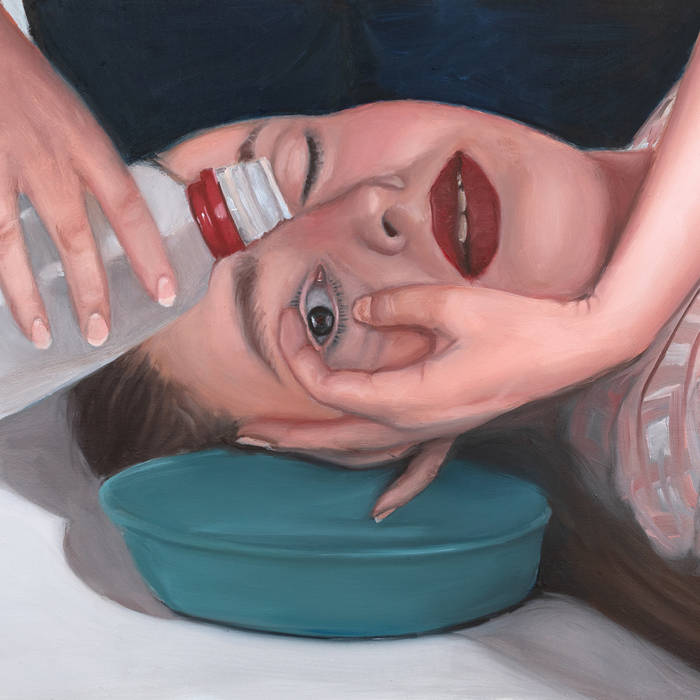
The cover art reinforces the same pressure. A face pressed into a cushion, eyes open, hands framing the head, a posture suggesting discomfort, containment and self-soothing. It is intimate and exposed, resisting easy interpretation.
Where New Long Leg was about noticing the world, and Stumpwork about navigating it, Secret Love asks what sustained engagement demands of the inner life. Shaw’s narrators are precise, caught mid-justification, explanation, or quiet collapse.
Arriving at the very start of the year, just as the dust settles on end-of-year lists and critical reckonings, Secret Love resets expectations for 2026. This is an album of emotional force, depth, and coherence, shaped through restraint, repetition, and control. Secret Love already feels like a record that will be returned to repeatedly, and measured against, as the year unfolds.
John Bradbury
Secret Love is out Friday, January 9th via 4AD