
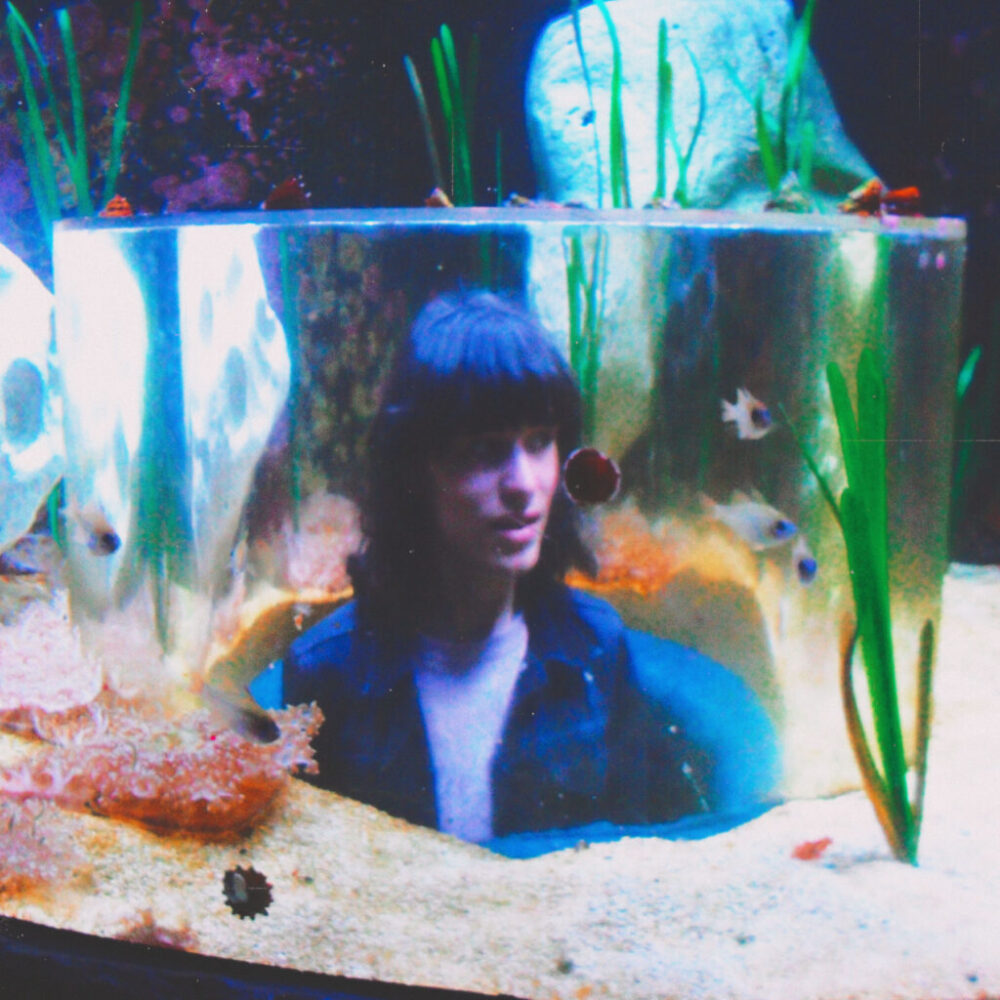
Floyd Marsden – What Does It Mean? (13th Floor Album Review)
What Does It Mean? is the third studio album from Kiwi singer-songwriter Floyd Marsden, following on from her debut Open Your Eyes in 2022 and 2024’s The Disco Lizards.
A quick flick through those two earlier works reveal a talented songwriter with an acerbic line ever at the ready, insightful observations and improbable rhymes created with a subtle change of tempo set against an eclectic mix of music ranging from the Arctic Monkeys influenced rock and roll to funk-infused folk with some jazzy elements thrown in for good measure.
The biggest change for Marsden in making this album is that she can now lay claim to being a full-time musician moving on from part-time teaching and hospitality jobs.
“This is the first album I’ll be releasing where my life is entirely revolved around music,” she reveals in the publicity blurb with a major theme of the music centred on finding a place “in a world that feels a little hostile and unfriendly.”
Marsden says that the record is book-ended with songs that offers up a poser of what is art and asking if she can make it now, then closing with an answer of sorts.
“It’s not quite as pretentious as it sounds, but it’s pretty close,” she discloses.
But it’s fair to say a long bow can be drawn when it comes to art – to focus attention on one thing, no matter how small or insignificant, building it up to great importance is surely the purpose of the exercise.
And when your whole life is concentrated on your art without unnecessary distraction then mountains can be built from molehills and we all go along for the ride fascinated, entertained and in awe of such great construction.
The opening song, as Marsden says, is a real poser.
What is art these days but something to be monetised?
What is art these days but something to be analysed?
She sings, questioning the real purpose of her work and offering up a sort of answer – All you ever wanted was to make something beautiful.
Marsden has a powerful voice in the lower register and she works it well singing slowly and deliberately against a rippling piano supported by purposeful drums and a synth solo brought in two thirds through the song.
It’s a classic song structure that stays through the whole album, but, being an accomplished multi-instrumentalist, Marsden delivers the songs with enough variety to keep it interesting.
These are songs of introspection, and much of that inward-looking questioning is turned toward love, whether present-day affairs, self esteem, or loves lost.
On She’s All I Ever Write Songs About she reveals – I used to think I was tortured,
One of a kind that much I was sure of – but has the realisation that it’s all driven by the uncertainty of love. For herself, for another? Probably both.
Marsden cleverly uses words to ask questions and to deliver answers that never quite close the loop, leaving room for interpretation and further discovery. This is the purpose of art and she plays it well.
She can be cutting, telling us It was shit to most experiences on Nottingham Castle, but disclosing it’s more a case of being there without a certain person. But she shows some humour making the exception for one place in particular – I went to Birmingham – it was shit. I would have been anyway though.
There are many wistful lines and beautiful imagery.
Would it matter if there was peace, would it matter if there was pain? Because it would never feel the same as driving in the rain, she sings in Driving In The Rain.
Lemon trees and apple juice, Or a café in the city, They’re all stained with the wrong views – visions that don’t suffice after a break up in Lemon Trees & Apple Juice.
In Passenger side she sings – It’s nice to have someone on the passenger side
It’s nice to have you.
These are songs full of love, cherishing moments together, before they’re gone. And the music complements the feel, piano chords to underline a passage or breaking into arpeggios to carry momentum, deliberate and mellow guitar solos, drums that drive and define space and time, synth sounds adding volume and melody. It’s almost hard to picture that Marsden produces all these elements herself, they’re all so accomplished.
Perhaps that’s a testament to the songwriting. It’s considered and thoughtful with key changes and tempo that reflect and lead the way. But I guess that’s what you’d expect from a music teacher.
Marsden also writes with humour, more of the sardonic smile than a belly laugh. And it’s no more evident than in her collaboration with Danica Bryant, in itself an improbable partnership that reflects well on both.
Pop Song is another love song, but with a twist. It’s a commentary on what it means to be in the limelight one moment and left behind as the next new thing is discovered.
You know I’m not afraid of the dark, I’m just scared to be alone in it – Marsden sings as Bryant harmonises.
It’s a pastiche with the Marsden musicality, building to a climax with a modulation in the final flourish and the fade-out repeated line, a plea, Listen to my pop song….
The denouement to this long player comes in two parts.
What Does It Mean? Is the title track and one of those awkward perennial questions. For Marsden that question is directed inward as she struggles to understand why she is driven to do what she does.
And the answer to the original question of what is art (from the opener) is brought with the realisation that happiness and beauty can be found in the smallest things in life – Sometimes I catch the light across the sea, And it is just enough for me, And I don’t need all this content. For I am just content.
The album comes full circle and closure. But, with art, there can never be full closure. And for Marsden these questions will still keep occurring and she’ll be driven to try to find and answer through music.
Long may it continue.
Alex Robertson
What Does It Mean? is out now. Click here!
