
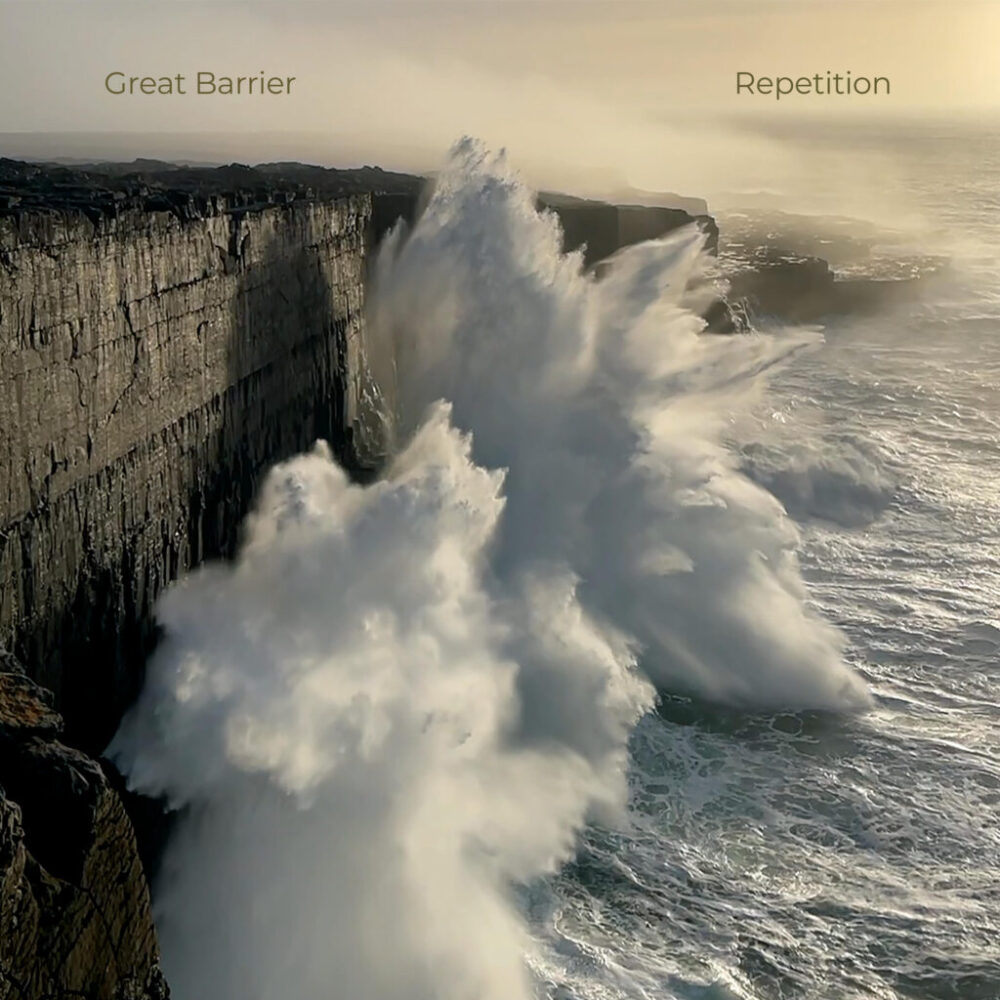
Great Barrier – Repetition (Zelle) (13th Floor Album Review)
On Great Barrier’s new album Repetition, the sea is restless, the heart is beating, and something elemental stirs beneath.
Repetition is like a rolling weather system that’s low and grey, heavy with tension, and impossible to ignore once it starts to move. The five instrumentals on this album engulf, churn, and hum until you surrender to its pulse: slow, inevitable, immense.
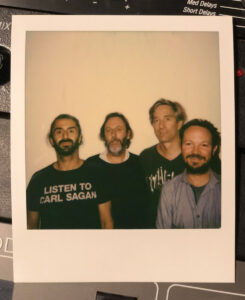
Great Barrier brings together a trio whose histories ripple through Aotearoa’s experimental undercurrent. Drummer Constantine “Dino” Karlis (HDU, Dimmer, Alastair Galbraith, Brian Jonestown Massacre) anchors the project with Dunedin expat Jason Kerr (My Deviant Daughter, Southkill) and Swiss neuroscientist-musician Richard Hahnloser on piano and synths. Recorded between Berlin and Bonn, Repetition also features a posthumous contribution from the late Dean Roberts, composer from Thela and White Winged Moth, whose guitar on Diastolic lends both resonance and melancholy. Together they fuse jazz minimalism, dub echo, drone, and noise into a patient dialogue of sound and space.
The record opens with Systolic, the first contraction of the album’s heartbeat. A bassy rumble and cymbal pulse keep time as the piece expands and retracts, tension building in small, almost imperceptible increments. Repetition here is not monotony but momentum: the slow rise of a tide that never quite breaks. A faint radio transmission fades in at the end, like a message from another frequency, or perhaps from within the body itself.
If Systolic measures the pressure of anticipation, Read Only is the first exhalation. Hahnloser’s rippling keys and Karlis’ brushed snare sketch a groove that feels exploratory yet grounded, its jazz gestures suspended in weightless reverb. The rhythm section moves one way, the keys another, and somewhere between the two lies the track’s core.
Diastolic, the counterpoint to Systolic, drops us into a shadowed public space. Drones buzz like neon lights; fragments of piano wander across the soundscape. Roberts’ guitar curls in and out of the mix, giving texture to the unease. The music circles but never resolves, ending in a slow unspooling, as if the machinery of the piece simply runs out of power, leaving the listener suspended in echo.
Where the first three tracks ebb and flow in slow cycles, the final two push toward turbulence and release. At just over three minutes, Deep Concern is the album’s shortest piece. It captures the moment of the storm’s surge as synths flare, drums accelerate, and the noise thickens into something close to panic. It’s here that repetition breaks its own pattern and the heartbeat spikes.
The closing Extinctathon exhales the tension with hissing percussion and slow, measured drumming giving shape to an uneasy calm. It moves with the breathing rhythm of something vast like the sea on the album’s grey-toned cover. Perhaps the world itself is waiting for the next pulse. This is music that speaks to the body as much as the mind.
With two neuroscientists in the lineup, the music carries an unspoken fascination with perception itself; how rhythm, space, and repetition alter what we feel and think. Across its 40 minutes, Repetition meditates on cycles: the systolic and diastolic, the inhale and exhale, the rise and retreat of sound and tide. The title nods to musical structure and to the biological rhythm of the repetition that keeps us alive. Great Barrier transform that idea into music that’s unsettling, absorbing, and deeply human.
Lean in and listen closely, the reward is the pulse.
John Bradbury
Repetition is out today on Zelle Records
