
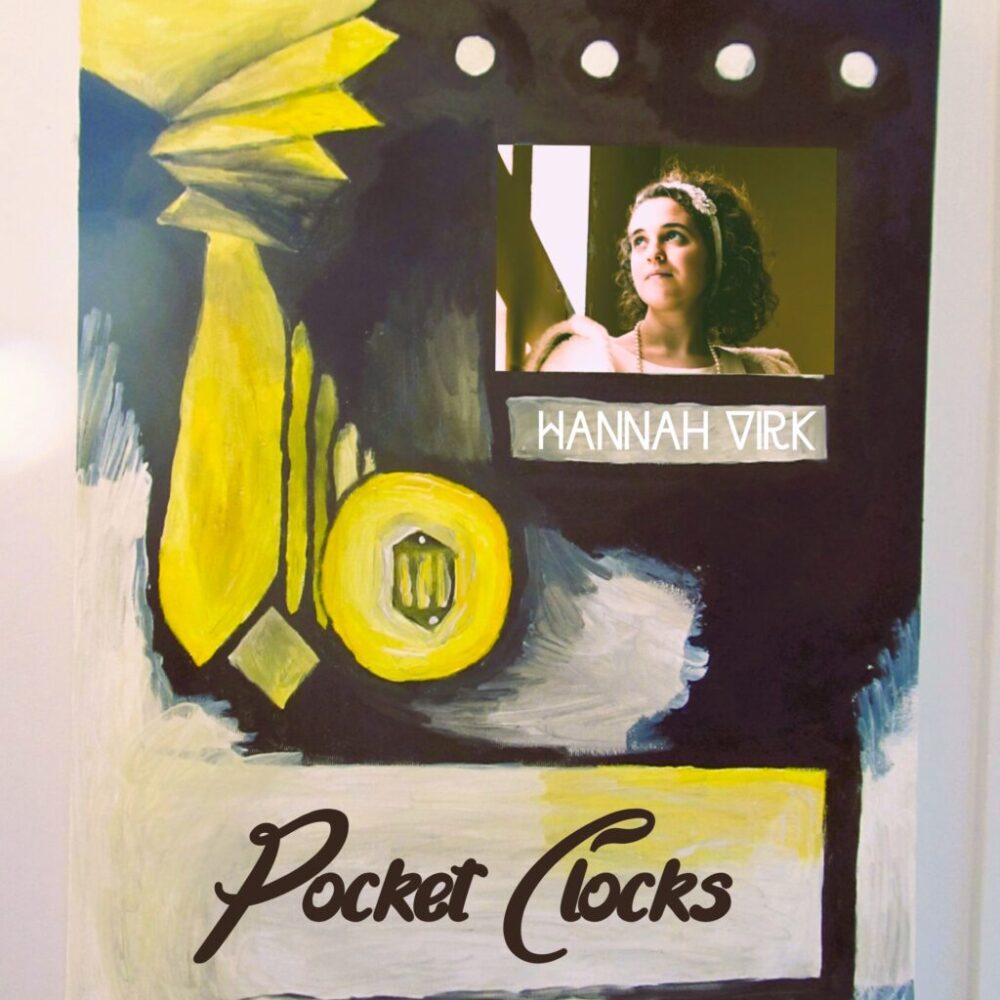
Hannah Virk – Pocket Clocks (13th Floor Album Review)
In her second album, Pocket Clocks, Hannah Virk stretches her sonic palette and lyrical ambition, as she swaps the domestic interiors of her debut, Upstairs / Downstairs, for a world governed by ticking clocks and algorithmic rhythms. It is a lo-fi, thoughtful, and distinctive meditation on time, technology, and identity, full of charm and intelligence.
On Upstairs / Downstairs, Virk carved out a sonic home for herself room by room. That collection was built with a lo-fi aesthetic drawing on keyboard presets and snippets of thought to sketch emotional architecture. The result suggested a quirky version of Boards of Canada, or a bedroom Jenny Hval.
With Pocket Clocks, the aesthetic remains in place, but this time she has delivered an album infused with time as metaphor, as measurement, and as existential presence. It is richer thematically, musically, and lyrically without losing the intimacy of her debut. This is a project that dwells on rhythm, duration, and delay. It is filled with ticking clocks, digital loops, childhood recollections, missed connections, algorithms, and the fading human traces in an increasingly digital world.
Opening track Camp Berwick presents itself as a fragmented dream sequence of memory and longing. The vocal delivery begins sparse and measured, then becomes layered and disorientating. It is accompanied by skittering beats and reverberating guitar that arrive, shift, and dissolve. The recurring lyric “Camp Berwick promises a lot” and a ticking that returns act as lodestars for what follows. Slowly Biting Youth Mix continues with spoken vocals, dissonant keys, and light percussion, like a duet between past and present that knocks you slightly off kilter. Its lyric, “Winding back the clock”, is another early signpost for the album’s overarching concerns.
The middle run holds some of the album’s richest ideas. Healing builds from a subtle percussive pulse into a repeated tender affirmation: “I’m healing you, you’re healing me.” Clever Grey Rabbit sounds like a dark nursery rhyme being read over a bubbling synth line. Timestamp feels both curious and urgent, with ticking motifs, repeated stabbing of piano keys, and offbeat melodies. The line “the things in our pockets are the secrets that we keep” neatly turns today’s smartphones and timepieces into the future’s poetic relics. The brief but affecting Glens is almost pastoral, with touches of acoustic guitar and moonlight-drenched imagery.
Modern Folk and Series of Things are more abstract pieces, rewarding repeat listens but a little elusive on first pass. In contrast, Necklace From a Friend offers a more traditional format and an emotional core that resonates. The lyric “It would be nice to see you again” lands like a welcome from a friend, and the percussion encourages you to walk along with them.
Lead single Can’t Outpace the Algorithm sits at the album’s heart as a warning about the digital future of time. Its rapid vocal delivery, half-spoken and half-sung, offers lines like “tick tock of mechanical clock” and “one click could bring a fortune.” It is a smart and slightly paranoid commentary on online performance, algorithmic validation, and losing your beat to the machine. It also stands as one of the album’s high points.
The final tracks feel deliberately placed to close the loop. Musos Club is a wry nod to the ghosts of Te Whanganui-a-Tara Wellington’s live scene, while Direct Credit ends the album with a mix of ringing tills, jagged piano keys, and time metaphors: “.. love watches, pocket clocks.” The last words deliver the album’s title and tie everything together like a locket clasping closed.
Virk’s production choices, while central to her aesthetic, begin to lose some impact across a full-length album since spoken word passages, layered vocals, and sudden rhythmic shifts return often. Such sonic similarities mean some songs blur together, and it can feel like variations on a few core elements rather than distinct pieces. You are left wondering how a future collaborator might help provide focus for the arrangements, opening up possibilities and retaining your attention without losing what makes her work so appealing.
Pocket Clocks enhances Virk’s musical identity with tighter rhythms, more instrumentation, and sharper ideas than her debut. She plays with ideas of time, memory, and digital life. This is a clever and conceptually rich collection that will reward patient listening and could have been even stronger with a little more restraint. It is intriguing to see where this distinctive artist goes next.
John Bradbury
Pocket Clocks is out August 10th. Click here to listen or buy.
