
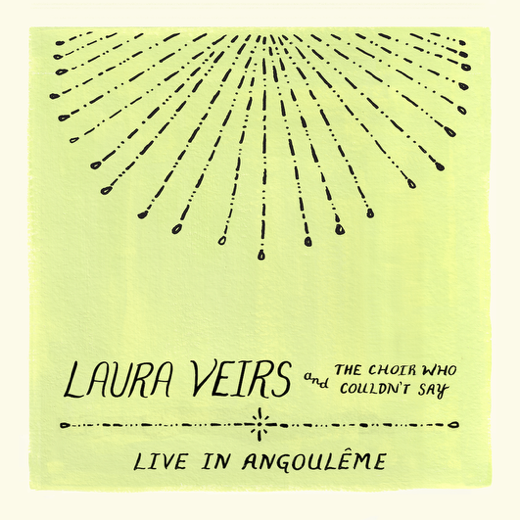
Laura Veirs & The Choir Who Couldn’t Say – Live in Angoulême (Raven Marching Band)
For more than two decades Portland based singer-songwriter Laura Veirs has turned quiet observation into iridescent song: rivers, snowfields, the faint tracks people leave behind. On Live in Angoulême she lets those vivid descriptions breathe through a 32-voice French school choir, and the result is both faithful and startlingly new.
Recorded after nine months of rehearsal, the performance draws from across her catalogue, from the spectral Carbon Glacier to the intimate My Echo and even the case/lang/veirs collaboration. Veirs sings and plays acoustic guitar, choir director Patrice Cleyrat occasionally adds piano or keyboard, and the choir’s voices are the orchestra.

During the set three wordless Shining Lamp Interludes appear as waypoints; their numbering is playfully out of order, 3, 2, then 3 again. Each piece blends rippling piano arpeggios with sustained, wordless vocals. They function as sonic lanterns: moments of pure atmosphere that let the hall’s resonance bloom, showcase the choir on its own terms, and guide the listener through a career-spanning set.
When the choir joins Freedom Feeling, Veirs’ gentle folk melody becomes almost cathedral-like. The refrain “For you, for you, for you, for me” circles in the air, communal rather than personal. Wide-Eyed, Legless keeps its playful bounce, but the extra voices give it new depth, like a single painting reflected through multiple mirrors. River songs such as Little Deschutes and Riptide gain a literal current: droning harmonies and sudden swells mimic water’s pull.

The transformation is most striking in pieces once defined by solitude. Lonely Angel Dust and Snow Camping were previously private; here the choir hums and sighs around Veirs’ guitar, turning personal reflection into shared ritual. At times Cleyrat’s arrangements mean the singers lag a heartbeat behind one another, a natural choral shimmer that adds warmth and human breath. The use of droning, wordless singing creates a gentle pedal tone, enriching the songs’ space and texture.
With only guitar strums or occasional piano notes, and a room full of young voices, Veirs’ solo folk songs are turned into community hymns. It shows how songs carefully translated across styles, languages, and generations can gain weight, meaning, and reach.
Live in Angoulême is a startling re-imagining. Veirs’ nature-steeped songwriting finds new light in the collective talent and energy of these French teenagers and their director. It delivers on the understated promise in Make Something Good: ‘We’re gonna make something so fine, you and I,’ which becomes a collective vow as the choir’s voices rise and fade in glistening layers.
John Bradbury
Laura Veirs And The Choir Who Couldn’t Say (Live In Angoulême) out 10th October via Raven Marching Band
Laura Veirs:
Website | Instagram | Facebook
