
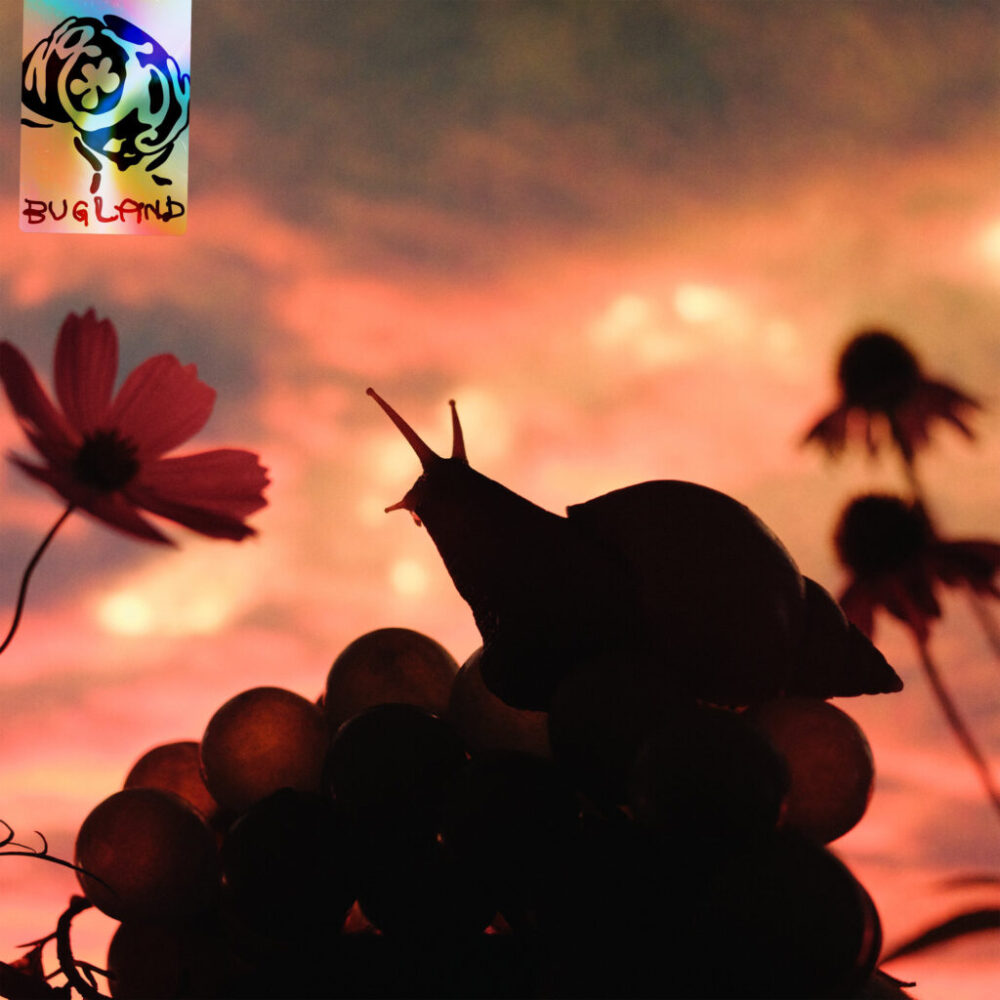
No Joy – Bugland (Hand Drawn Dracula) (13th Floor Album Review)
Canadian artist Jasamine White-Gluz is the creative force behind No Joy, originally a two-piece hailing from Montreal, now she performs and records solo having shifted to rural Quebec.
Bugland is her fifth album in a genre loosely described as shoegaze, but traverses many more musical spheres in its 8 tracks.
From the opening song, Garbage Dream House, No Joy is hinting at a wider world beyond the garden fence, showing influences from U2’s Zooropa with a metronomic guitar riff and electronica layers building before White-Gluz’s voice chimes in.
“I only have a CD player in my car, and I like to listen to CDs that I find at the thrift store,” she told The Quietus in an interview ahead of the album’s release. “Sometimes you’re almost home, but there’s a little bit left on the CD, so you take a longer way – Zooropa is one of those. I wanted to make something like that,”
And while the subject matter may differ from the Irish band’s preoccupations, with lyrics immersed in matter close to the garden – “Litters overgrown, Is always overcome, And again modified winged plum” – the sound is unmistakingly rooted in that early 90s experimental stadium rock meets electronica blend. Five minutes is up before you fully hit the groove of 30 years ago, wondering if we can take another spin around the block.
While technically Bugland is the product of White-Gluz, the influence of Angel Marcloid, AKA Fire Toolz, multi-instrumentalist producer from Illinois is clearly evident.
“The collaboration really felt limitless. I didn’t have to adhere to a certain vision in a way that made me feel like I couldn’t be Fire-Toolz… I was able to be creative in ways that were freeing as if I was making my own album.,” says Marcloid in the albums publicity blurb.
The pair apparently independently listened to mixes for the album driving rural highways, sending files back and forth between Quebec and Illinois via Ableton, road-testing the tracks before settling on final mixes.
“We would get in our cars and drive around the countryside listening to the mixes,” White-Gluz recounts in The Quietus interview. “If you’re skipping or changing the volume in between songs, you gotta go back.”
The title track was the first collaboration for the two artists, Marcloid reworking a decade-old demo with neither having the intention of ever releasing it. The result was so good it inspired White-Glutz to make a whole album.
The drum machine intro is instantly catchy and the (as described by White-Gluz) Korn-esque bass line creates an urgency that draws the listener into her strange, insect world.
“you’re in bugland, leave you suntanned, you look better with, eyes eyes eyes…”
White-Gluz’s voice is almost impercitbile, a tiny bug-sized voice in an enormous world.
That world might appear small but No Joy’s music is big, often described as maximalist – a wall of considered complex layers and themes.
Fire-Toolz says she felt more like a band member than the producer. Although Bugland is a solo work created with elements of seclusion, the collaborative nature shines through.
As the promo material says: “But maybe we can thank bugs for that – they surround us even when we seem alone, communing and collaborating with us via biting us or eating our food. They’re everywhere, always doing things, constantly dying and returning like little messiahs.”
Bits is one of the poppier tracks on Bugland meshed with a ripping bass line that could come straight from Nirvana’s Nevermind.
White-Gluz’s voice is easier to connect with on this track, her breathy vocal interspersed with spoken word in what can only be described as a love song, although, generally, the lyrics are rather obscure. She admits that the words come after the music bits have been sorted out, coming from feelings rather than intention.
“The initial lyrics are often nonsensical, stream of consciousness – sometimes they are kind of cool, and I keep them,” she told The Quietus. “I always like to create soundscapes or textures that will evoke something versus a lyric that might evoke, so I’m hoping that the lyric and the sonic can work together to create an emotional reaction.”
Her voice can sound as if she’s confiding in the listener, drawing them into her world, contrasting with the expansive sound of the music. And she claims to record the vocals in her closet among the vintage clothing, in the dark.
Much of the album can fall back into the slightly obscure world of shoegaze – introspective, restrained, intimate. But Marcloid’s influence is never far bringing a bit more rock and roll, dance beats and a broader horizon to No Joy’s world. Fire-Toolz even gets an artist’s credit on the final track, Jelly Meadow Bright a nearly 8-minute long opus that features a Stooges-esque saxophone in the closing, chaotic stanza.
With credits to Lana Cooney (drums), Tara McLeod (guitar, bass), Casey Scheibling (bass), Josh Plotner (saxophone), Garland Hastings (drums), Morgan Greenwood (guitar, misc/electronics) and, of course, Angel Marcloid this is a collection of songs worth listening to. Another piece in the in the talented jigsaw that makes up Jasamine White-Gluz and No Joy.
Welcome to Bugland.
Alex Robertson
Bugland is out now on Hand Drawn Dracula Records
