
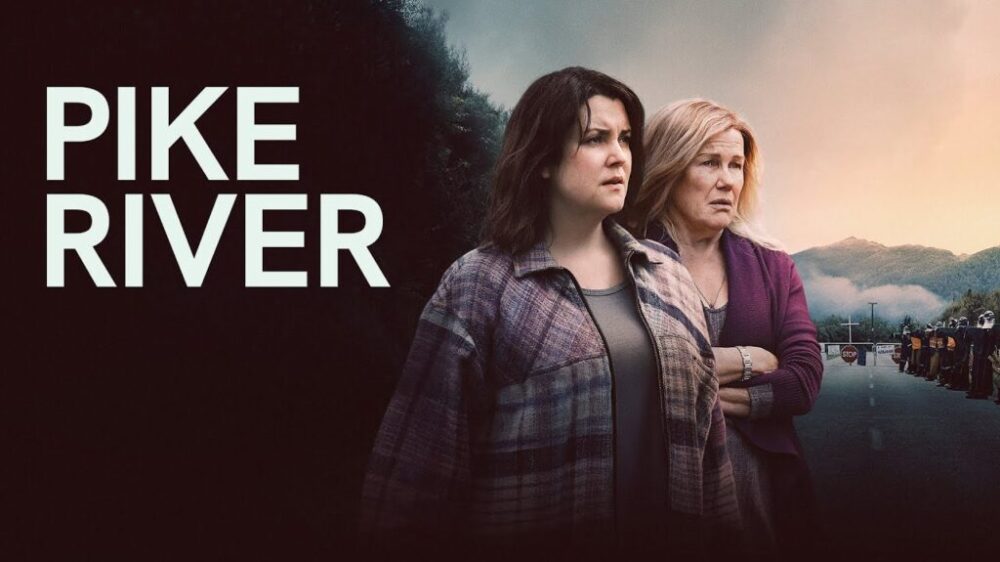
Pike River Dir: Robert Sarkies (13th Floor Film Review)
Erebus, Cave Creek, White Island, and Pike River. In a country the size of New Zealand, where six degrees of separation is a very real construct, our national disasters are writ large upon the collective psyche.
Starring Melanie Lynskey, Robyn Malcolm, Lucy Lawless, Erroll Shand, Madeleine McCarthy
What a daunting task it must have been, then, to take on the Pike River tragedy and give it the sensitive, empathetic treatment it deserves—without veering into over-sentimentalised “disaster of the week” territory or creating a political statement film that undermines the intrinsically human suffering at its heart.
This is not my usual review. I want to tell you about the film, to be all “just the facts, Ma’am”: here’s the cast, here’s the plot, here’s what I saw. But I simply can’t do that—not with this one. Because this is not a film you watch; this is a film you feel, with everything that is in you.
I had the immense privilege of attending the Auckland premiere, and it was always going to be an emotional night given the presence of the families—particularly Anna Osborne and Sonya Rockhouse, the crusading wife and mother respectively of two of the victims—along with Rowdy Durbridge, who both worked in the mine and lost his son in the explosion.
I was initially surprised that this film, which is destined to be lauded as one of the greatest New Zealand films to come, premiered at the Waterfront rather than at the historic and very beautiful Civic Theatre. Whatever the reason, it was absolutely the right choice of venue: smaller, more intimate, like watching the film in your living room, surrounded by family and close friends.
The overwhelming love, warmth, and sheer unadulterated emotion that filled the ASB Waterfront Theatre last night transformed it into a place of love and fellowship—a safe, concrete embrace in which we experienced something extraordinary together.
And by extraordinary, I’m not referring to the revelatory sweary-ness of our esteemed MC, a man more commonly referred to by your mum as “that nice John Campbell”. From the first of many f-bombs that a clearly emotional JC dropped, we knew we were in for a quintessentially Kiwi kind of premiere—one where no one was playing it cool, and everyone wore their passion for this project well and truly on their sleeves.
It made perfect sense that Mr Campbell’s introduction was so liberally sprinkled with the F-word, because there were so many on-screen moments when everyone in that theatre said it as well:
- The press conference that went from hopeful to hellscape in seconds — Fck!*
- The lies and false hope fed to the families — Fck!*
- The gaslighting from mine officials and the NZ government — Fck!*
And most of all, the sheer guts and tenacity of Osborne and Rockhouse, having to fight like tigers for the most basic of human rights: the right to clarity around what really happened to the men they loved.
To be strapped into that rollercoaster of hope—so closely followed by despair—and to find the courage to pivot from hope of rescue to the battle for recovery takes a strength that most of us can only pray we will never be called upon to summon.
Portraying two extraordinary women, Malcolm and Lynskey deliver performances of equal extraordinariness. The time they spent with Anna Osborne and Sonya Rockhouse during filming was clearly well invested. Performances that tear your heart out of your chest are rare—and to witness two such performances in one film is a privilege beyond words.
Pike River sensitively, gut-wrenchingly, and justifiably furiously captures a piece of New Zealand’s history that can never—and should never—be forgotten.
A friend who attended the screening said to me afterwards, as we were mopping up our tears, that her own health and safety role wouldn’t exist if Pike River hadn’t happened. The disaster led to significant changes in safety regulations across the board in New Zealand.
I don’t know how much comfort the families of the 29 can take from knowing that it became a catalyst for change in the industry. I imagine the answer is “not a lot.” It was a terrible way to learn those lessons, and no amount of subsequent reform will bring back their men.
My hope is that every New Zealander sees this film. It is a hard watch—but a necessary one.
Perhaps most importantly, it was made with the full cooperation of the victims’ families. This is not exploitation; this is exposition. By bringing the unvarnished truth into the light, they are asking their fellow Kiwis to bear witness—so that we can move forward together, in understanding and compassion.
Jo Barry
Pike River is in cinemas from October 30th