
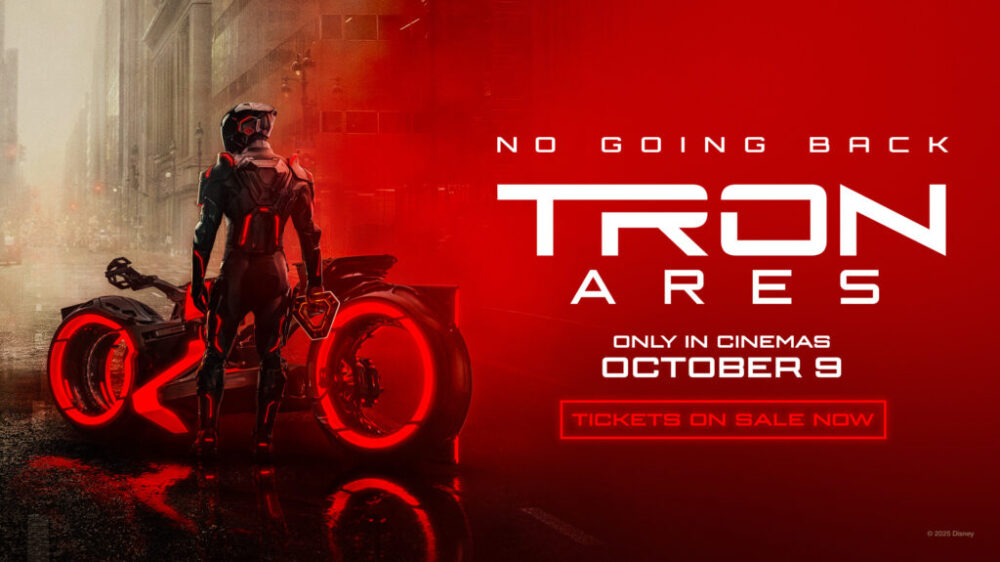
Tron: Ares Dir: Joachim Rønning (13th Floor Film Review)
I was just nine years old when the first Tron film burst onto our screens in 1982, introducing us to Kevin Flynn, played by the great Jeff Bridges, and to The Grid a dazzling, computerised world unlike anything we’d seen before. It was visionary, strange, and way ahead of its time.
Tron played by Bruce Boxleitner is abducted and digitised into this virtual realm, forced to fight for survival against an evil program. With its then-new and otherworldly computer graphics, paired with a groundbreaking score by synthesiser pioneer Wendy Carlos, Tron was not exactly embraced by critics or audiences. Yet, as the years passed, it earned its rightful cult status. The arcade game, the merchandise, the sheer audacity of its ideas all kept it alive in our collective imagination.
Fast-forward twenty-eight years, and we were gifted Tron: Legacy. Jeff Bridges returned as Flynn, now the elusive creator of The Grid. This time, the story followed Flynn’s adult son Sam Garrett Hedlund, who is pulled into the digital world after receiving a mysterious message from his long-lost father. Joined by Quorra played by Olivia Wilde, an algorithm unlike any other, they face the menacing program Clu and his plan to invade the real world.
Despite its slick CGI, strong performances, and a truly masterful score by Daft Punk, Tron: Legacy didn’t quite land with audiences or critics at the time. But over the years, it too has gained a loyal following perhaps because it dared to be emotional and visually poetic at once.
Now, twelve years later, Tron: Ares has finally arrived. Directed by Joachim Rønning, the third instalment introduces new characters while paying thoughtful homage to the first two films. A brief recap at the start neatly sets the stage, making it accessible for newcomers and deeply satisfying for long-time fans.
At the heart of the story is a program named Ares, played by Jared Leto, sent on a mission to recover something of immense importance. What begins as a straightforward operation quickly spirals into a dangerous quest for survival, blurring the lines between digital and human, creation and creator. Leto is surprisingly compelling here he reportedly stayed in character for the entire shoot and his performance gives the film a strange, magnetic energy.
My expectations were low, but Tron: Ares genuinely impressed me. It’s a visual feast: imaginative digital worlds that feel almost tangible, rendered with seamless effects that are as breathtaking as they are intricate. The score, composed by Nine Inch Nails, is darkly hypnotic pulsing, immersive, and utterly fitting for the film’s tone. Everything builds beautifully toward a crescendo that feels both thrilling and earned.
You will not be bored for a moment. The pacing, the tension, the sheer aesthetic pleasure of it all make Tron: Ares a worthy successor. And for fans of the original films, the 80s nostalgia woven through it is glorious. I can’t wait to watch it again not just to relive the spectacle, but to spot more of those subtle nods and Easter eggs to the past that make this universe so enduring.
Tron: Ares isn’t just another sequel. It’s a reminder that some digital dreams never really die – they just evolve.
Julie Collins
Tron: Ares is in cinemas now. Click here for tickets and showtimes
